
A study of 250,791 drinkers followed for 14 years found two types of alcohol were linked to a higher risk of sudden kidney injury. A third type showed no link

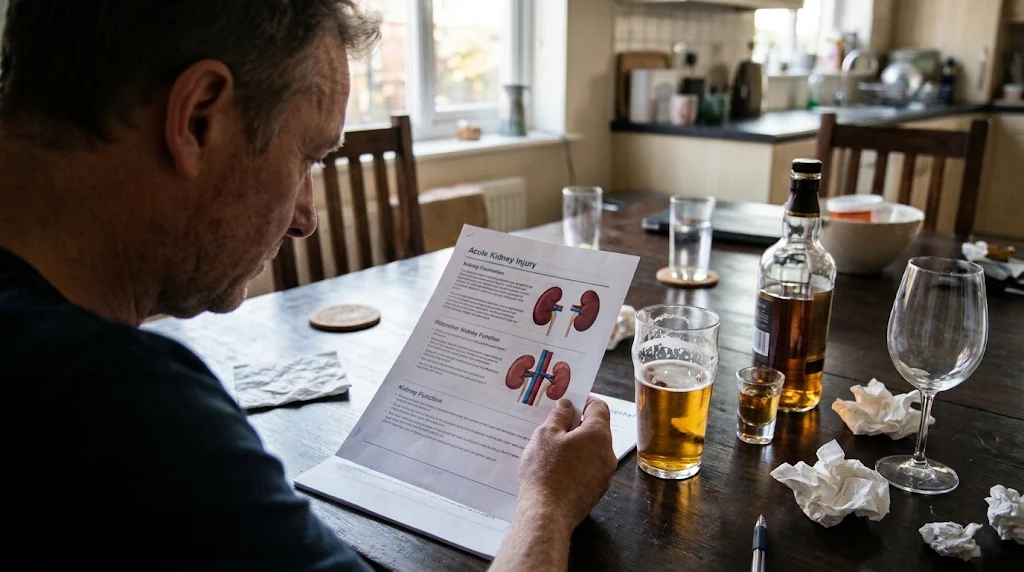
When people think about alcohol and organ damage, they usually think of the liver. The kidneys get far less attention, and kidney problems in drinkers have mostly been blamed on liver disease. Researchers at Anglia Ruskin University used UK Biobank data on 250,791 adults who drink, followed for an average of 14 years, and looked separately at beer, wine and spirits to see which were linked to sudden kidney injury.
Beer and spirits were both linked to a higher risk of acute kidney injury. Red and white wine were not.
For spirits, people in the top third of drinkers, averaging 8.73 units a week, had a 25.5% higher risk than the lowest third, who averaged 1.22 units. Even the middle third, at 2.69 units a week, had an 8.1% higher risk.
For beer, the top third averaged 23.6 units a week and had a 14.8% higher risk than the lowest third, at 2.67 units. The middle third, at 6.81 units, had a 5.7% higher risk.
Over the follow-up, 10,335 participants developed acute kidney injury.
In the UK, one unit is 8 grams of pure alcohol. A pint of regular beer is roughly two to three units, and a single shot of spirits is about one. So the top spirits group averaged around eight or nine shots a week, an amount many people would consider moderate.
Acute kidney injury is a sudden drop in kidney function, over hours or days. It is often triggered by dehydration, infection, surgery or certain medications, and it can lead to longer-term kidney disease. It is a common reason for hospital stays, especially among older adults.
The link held after the researchers accounted for liver disease and a wide range of other health and lifestyle factors. That matters because the usual assumption is that drinking harms the kidneys mainly by damaging the liver first.
“Spirits and beer may contribute directly to kidney damage through inflammatory pathways,” said lead author Rudolph Schutte, associate professor of cardiovascular epidemiology at ARU. He described the work as “one of the largest prospective studies to investigate alcohol consumption and acute kidney injury.” The inflammation idea has some support in the data. Two blood markers of inflammation, C-reactive protein and white blood cells called neutrophils, rose as people drank more beer and spirits, and fell as they drank more wine. People with higher levels of either marker were more likely to develop kidney injury.
Why wine showed no link is not clear. Wine drinkers often drink with meals and tend to differ from beer and spirits drinkers in diet, income and other habits, which can be hard to fully adjust for. The finding does not mean wine protects the kidneys.
Researchers keep finding that the type of drink can matter as much as the amount. We have covered how tea was linked to heart disease risk, and a trial of a plant extract that cut binge drinking.
For people who drink beer or spirits regularly, the practical points are familiar ones. Cutting back lowers the risk, staying hydrated matters, and anyone with existing kidney problems, diabetes or high blood pressure should talk to a doctor about how much is safe.
There are limits. The study is observational, so it shows a link, not proof that beer or spirits cause kidney injury. Alcohol intake was self-reported once, at the start, so changes in drinking over 14 years were not captured. Only people who drink were included, so there was no comparison with non-drinkers, and UK Biobank participants tend to be healthier and wealthier than the general population. The wine result is not evidence that wine is safe for the kidneys.
The study received no specific funding, and the authors declared no competing interests.
Source
Schutte R, et al. “Alcohol and acute kidney injury—prospective evidence from the UK Biobank in 250,791 alcohol consumers” Scientific Reports, 2026.
DOI: 10.1038/s41598-026-76255-9