New research found that depression may begin in your gut when a common bacterium interacts with a chemical found in most personal care products

Depression has been explained to most people as a brain problem. A chemical imbalance. Too little serotonin, too much cortisol, a prefrontal cortex that cannot quiet an overactive amygdala. The treatments that followed from this explanation target the brain directly: antidepressants that adjust neurotransmitter levels, therapy that rewires thought patterns, medications that dampen the stress response.
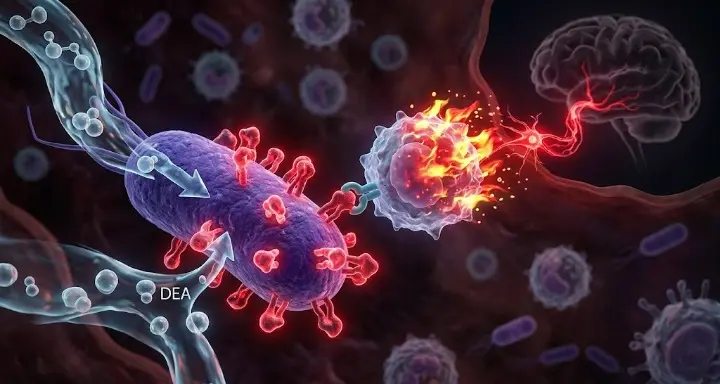
Harvard Medical School researchers have now traced a pathway to depression that starts somewhere most people would never think to look. Not in the brain. In the gut. And not just in the gut in the general sense that the microbiome affects mood. In a specific bacterium, interacting with a specific chemical found in products sitting in your bathroom right now, producing a specific inflammatory molecule that travels up to the brain and helps create the conditions for major depressive disorder.
The mechanism is precise enough to be disturbing. And it suggests that for a significant number of people, the depression they are experiencing may not be primarily a brain disorder at all.
The Bacterium Nobody Was Watching
Morganella morganii is not a pathogen in the conventional sense. It lives quietly in the digestive tract of most people without causing obvious harm. It does not produce the dramatic symptoms associated with dangerous gut bacteria. For most of its history in medical literature, it was considered an opportunistic organism, occasionally problematic in immunocompromised patients, largely unremarkable otherwise.
Several years ago, large-scale population studies began noticing something unusual. People with major depressive disorder had consistently higher levels of Morganella morganii in their gut microbiomes compared to people without depression. The association appeared across multiple datasets. But an association is not an explanation. The question that nobody could answer was whether the bacterium was somehow contributing to depression, whether depression was altering the gut environment in ways that allowed it to flourish, or whether something else entirely was driving both.
The Harvard team, led by researchers from Harvard Medical School and the Broad Institute of MIT and Harvard, set out to find the mechanism. What they found was more specific than anyone had anticipated.
The Chemical Hitchhiker
The key to the discovery was a molecule called diethanolamine, or DEA. This is not an obscure industrial compound. DEA is found in nearly 20% of all personal care products, present in shampoos, body washes, facial cleansers, lotions, and household cleaning products used by millions of people every day. It is also found in metalworking fluids, pesticides, antifreeze, and pharmaceuticals. The European Commission has already prohibited DEA in cosmetics due to its links to carcinogenic nitrosamines. In the United States, the EPA lists it as a hazardous air pollutant. It enters the body primarily through skin absorption during daily personal care routines and through ingestion of trace amounts in food and water.
Once inside the body, DEA reaches the gut. And in the gut, it encounters Morganella morganii.
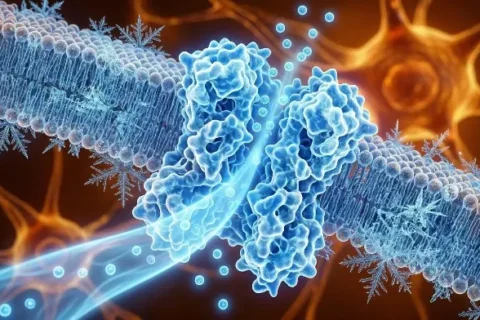
Under normal circumstances, Morganella morganii produces a class of fatty molecules called phospholipids as part of its ordinary biological functioning. These molecules sit on the bacterium’s surface and are generally harmless. But when DEA is present in the gut environment, something unexpected happens. The bacterium incorporates DEA into its phospholipid structure, substituting it into a position where a different molecule would normally sit. The result is a chemically altered phospholipid that the body has never encountered in its natural form. And the immune system, encountering this unfamiliar molecule, responds to it as a threat.
The Inflammatory Trigger
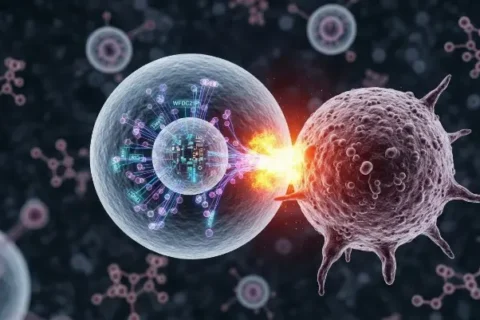
The Harvard team used a bioassay-guided approach to identify exactly what these altered phospholipids were doing at the molecular level. What they found was that the DEA-modified molecule produced by Morganella morganii activates two specific receptors on immune cells called TLR1 and TLR2, toll-like receptors that function as the immune system’s pattern recognition sensors for detecting foreign and potentially dangerous molecules.
When TLR1 and TLR2 are activated, they trigger a pro-inflammatory immune response, releasing cytokines and initiating the cascade of systemic inflammation that the body uses to fight infections. In an acute infection, this response is appropriate and lifesaving. When it is triggered chronically by a bacterial metabolite produced in the gut day after day, the result is persistent low-grade inflammation circulating through the bloodstream and reaching the brain.
The connection to depression runs through this inflammation directly. Chronic inflammation contributes to the development of many diseases and has been linked with depression, and this tells a coherent story from Morganella morganii at the beginning to depression at the end. The inflammatory signal generated in the gut travels systemically, crosses into the brain environment, and contributes to the neuroinflammatory state that is increasingly recognized as a core feature of major depressive disorder in a significant subset of patients.
The researchers also noted that the findings strengthen arguments that major depressive disorder has links to autoimmune disease, a connection that has been gaining scientific traction for years but has lacked the precise molecular mechanisms to fully support it. The DEA-modified phospholipid produced by Morganella morganii behaves similarly to cardiolipins, a class of molecules that the Harvard team had previously shown can trigger inflammatory cytokine release and contribute to autoimmune complications in other contexts.
What This Means for Who Gets Depressed and Why
The implications of this finding extend well beyond one bacterium and one chemical. They suggest that depression, at least in some patients, is better understood as an inflammatory and immune condition than as a straightforward deficiency of serotonin or other neurotransmitters.
This is not a new hypothesis. The inflammatory theory of depression has been building in the research literature for over a decade. Studies have consistently found elevated levels of inflammatory markers including C-reactive protein, interleukin-6, and tumor necrosis factor-alpha in patients with major depression. Anti-inflammatory treatments have shown antidepressant effects in some clinical trials. Patients with autoimmune conditions have disproportionately high rates of depression. The Harvard findings add a specific, traceable pathway to this body of evidence, one that begins with an environmental chemical absorbed through the skin, passes through a gut bacterium, and ends in the brain.
It also raises an uncomfortable question about the twenty percent of personal care products that contain DEA. The compound enters the body through daily skin contact, travels to the gut, and in people with sufficient levels of Morganella morganii, triggers an inflammatory cascade with documented links to depression. The researchers suggest that DEA itself could serve as a biomarker, potentially identifiable in patients with depression-linked inflammation and offering a diagnostic signal that current approaches entirely miss.
The Treatment Logic That Follows
If a meaningful subset of depression cases are driven by gut-generated inflammation rather than purely by brain chemistry, the treatment logic changes fundamentally. Antidepressants that target serotonin reuptake are not addressing the upstream source of the problem in these patients. They are managing a downstream symptom of an inflammatory process that continues uninterrupted.
The Harvard findings point toward a different set of intervention targets. Reducing Morganella morganii levels in the gut through targeted microbiome interventions. Blocking the TLR1 and TLR2 receptors that the DEA-modified phospholipid activates. Reducing DEA exposure through changes in personal care product formulations. Developing anti-inflammatory treatments specifically calibrated for depression patients with elevated inflammatory markers. None of these approaches are fully developed yet, but each of them is more mechanistically grounded than adjusting neurotransmitter levels in a brain whose actual problem may be originating in the intestine.
Dr. Jon Clardy, senior author of the study and professor of biological chemistry and molecular pharmacology at Harvard Medical School, framed the significance of the work in terms of what it establishes about the gut-brain connection. Scientists have long suspected that the microbiome influences mental health. This research provides one of the clearest molecular explanations yet for how a specific bacterium could be contributing to a specific psychiatric disorder through a pathway that is traceable, measurable, and potentially modifiable.
The Shampoo in Your Shower
The detail in this story that will sit with most people is the one involving DEA. The chemical implicated in this inflammatory pathway is not something you have to seek out or expose yourself to through unusual circumstances. It is present in shampoos, body washes, and facial cleansers, products that many people use every single day, applied directly to skin that absorbs it into the bloodstream. It has been present in these products for decades. The European Commission recognized its risks and banned it from cosmetics. The United States has not.
This does not mean that washing your hair is causing depression. The pathway requires the presence of sufficient Morganella morganii in the gut, and individual microbiomes vary enormously. But it does mean that an environmental chemical present in everyday products is capable of interacting with gut bacteria to produce an inflammatory molecule directly linked to major depressive disorder, and that this interaction has been happening in millions of people’s bodies without anyone connecting the mechanism until now.
The story of depression has always been more complicated than a simple brain chemistry problem. The Harvard data is now drawing a line from the products on your bathroom shelf, through a bacterium in your gut, to the inflammation that may be fueling a condition that one in five people will experience in their lifetime. The brain is not where this story starts.
Source:
Bang, S., Shin, Y.H., Park, S.M., et al. Unusual Phospholipids from Morganella morganii Linked to Depression. Journal of the American Chemical Society, 2025; 147(4): 2998. DOI: 10.1021/jacs.4c15158 https://hms.harvard.edu/news/drawing-line-gut-microbiome-inflammation-depression https://www.sciencedaily.com/releases/2026/04/260425091216.htm