New groundbreaking discovery found a way to stop high blood pressure from warping the human heart

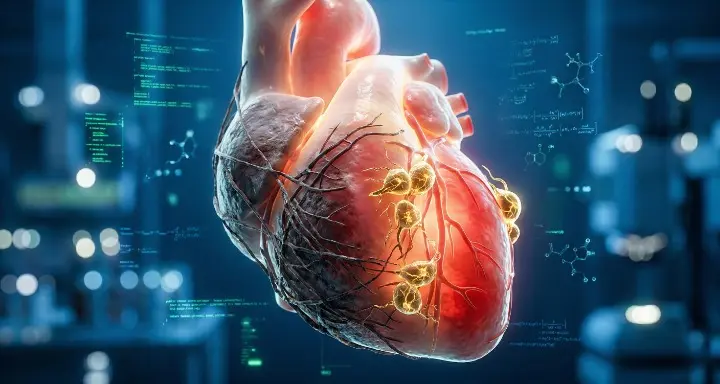
The human heart is a relentless machine, but it has a fatal flaw: it doesn’t know how to forgive. When a heart attack strikes or high blood pressure strains the muscle, the body’s internal alarm system triggers an aggressive inflammatory response. While intended to help, this biological panic often leads to “remodelling”—a clinical euphemism for the heart warping into a stiff, scarred, and inefficient pump. Once the scarring starts, the clock begins ticking toward heart failure.
For decades, doctors have tried to dampen this fire with pills, but systemic drugs are blunt instruments. They quiet the immune system everywhere, leaving patients vulnerable to infections while barely touching the specific chaos happening inside the heart’s walls.
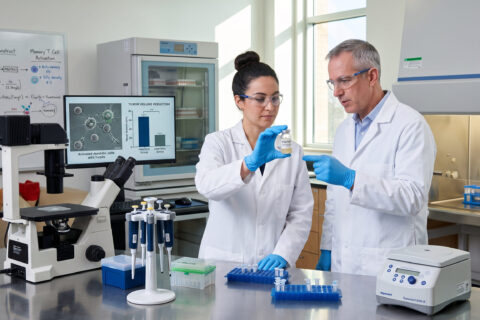
However, a team of researchers has just unveiled a more surgical approach. In a study published in Nature, scientists have successfully engineered a specialized type of immune cell to act as a peacemaker. These aren’t just any cells; they are “iCDCs”—engineered immunosuppressive dendritic cells—designed to hunt down cardiac damage and force the body to stop destroying itself.
The Architecture of Peace
Dendritic cells are often called the “generals” of the immune system. Their usual job is to identify threats and command T-cells to attack. But the researchers at Zhejiang University wondered: what if we could rewrite their orders?
By genetically modifying these cells, the team turned them into immunosuppressive agents. These iCDCs don’t call for an invasion; they call for a ceasefire. When injected, these designer cells migrate directly to the site of the cardiac injury. Once there, they perform a dual-role maneuver that sounds like science fiction.
First, they directly tell the local “worker” cells—fibroblasts—to stop producing the stiff collagen that leads to permanent scarring. Second, they act as a nursery for Regulatory T-cells (Tregs), which are the body’s natural anti-inflammatory peacekeepers. By boosting the population of these “peace” cells, the iCDCs create a self-sustaining environment where the heart can actually begin to recover rather than hardening into a useless lump of tissue.
Beyond the Petri Dish
The results were startlingly consistent. In mice suffering from simulated heart attacks and chronic high blood pressure, the iCDC therapy didn’t just slow the decline; it preserved the heart’s ability to pump. The treated hearts were less scarred, better hydrated with blood flow, and significantly stronger than those left to the body’s natural, frantic devices.
But the real test—the one that makes the medical community sit up—happened in non-human primates. Using a model that closely mimics human heart anatomy, the researchers saw the same effect. The engineered cells reduced fibrosis and improved contractile function without causing systemic toxicity. This is the “Holy Grail” of cardiac medicine: a treatment that works exactly where it’s needed without making the rest of the patient sick.
What This Means for You
If you have a family history of heart disease or struggle with chronic hypertension, this research represents a fundamental shift in how we might one day treat “the big one.” Currently, if you survive a heart attack, you are often managed with a cocktail of drugs designed to lower the workload on a damaged pump. We are essentially managing the decline.
The iCDC platform suggests a future where, shortly after a cardiac event, you could receive an infusion of your own engineered cells. These cells would navigate your circulatory system, find the bruised muscle of your heart, and immediately begin the work of preventing the “remodelling” that leads to long-term disability.
You wouldn’t just be surviving the attack; you would be preventing the secondary collapse that usually follows. It is a transition from passive management to active biological repair.
The Long Road Ahead
While the results in monkeys are a massive leap forward, we aren’t at the pharmacy stage yet. The researchers still need to prove that these cells remain stable over years, not just months, and that the delivery methods can be standardized for hospital settings.
However, the “proof of concept” is now undeniable. By turning the body’s own defense system into a repair crew, we are finally learning how to speak the language of the heart. The era of the “scarred heart” may be reaching its end, replaced by a future where our own cells are the ultimate medicine.