Scientists found that when chronic back pain flares, the brain switches on the network tied to your sense of self, the opposite of what ordinary pain does

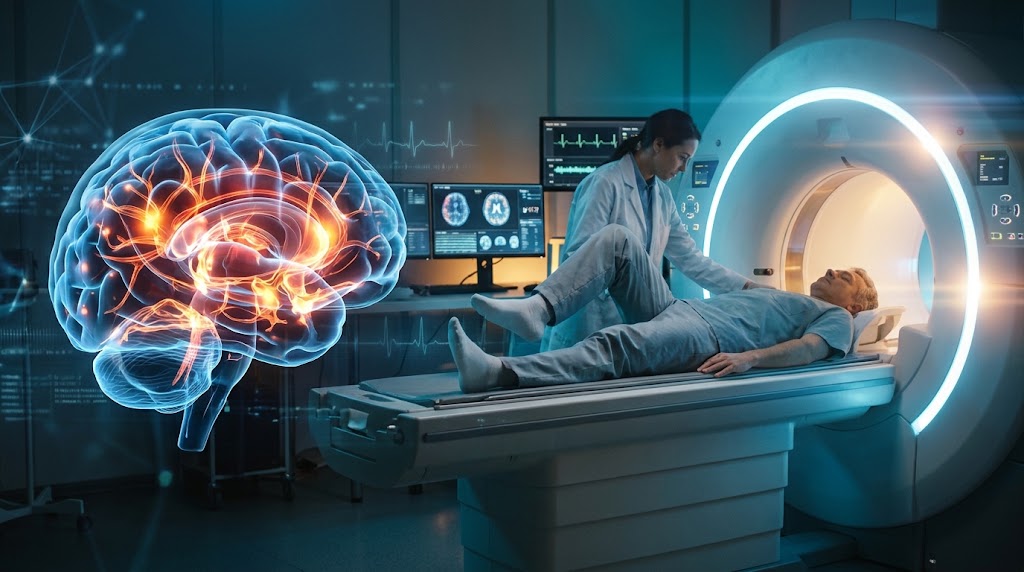
Low back pain is the leading cause of disability worldwide, and for many people it never fully goes away. Researchers at UC San Diego wanted to see what happens in the brain at the moment a chronic back pain flare hits. They scanned the brains of 114 people with chronic low back pain while a standard leg-raise test triggered their pain, using an MRI method that tracks blood flow. For comparison, they also applied a harmless but painful burst of heat to the calf.
The two kinds of pain lit up the brain in opposite ways. When the heat hurt, the brain’s default mode network, a set of regions most active when we think about ourselves, our memories and our feelings, became less active, as it normally does during pain. When the back pain flared, the same network switched on.
“In every pain study, when you’re experiencing pain, the DMN deactivates,” said senior author Fadel Zeidan, a professor of anesthesiology at UC San Diego. “What we show for the first time ever is that when you have a pain flare, it turns on instead. You start to identify the experience with who you are.”
During ordinary pain, the brain normally turns this self-focused network down so it can focus on the threat in front of it. A chronic pain flare seems to do the reverse, pulling in the parts of the brain that handle identity, memory and expectations.
That may help explain why chronic back pain is so hard to treat. “The moment-to-moment experience is contaminated not only by the feeling of pain, but by the anticipation of it and recovery from it,” Zeidan said. “It’s contaminated by past experiences like embarrassment about not being able to participate in normal activities and fear of movement when trying to avoid the pain.”
The second finding is about severity. People with worse chronic back pain had stronger connections between the self network and the primary somatosensory cortex, the region that processes physical sensations including those from the back. A rising heart rate during the leg-raise test also tracked closely with how intense the flare was.
Zeidan argues that standard pain medicine targets the signal but not the relationship with it. “Current pain medicine is fixated on ridding patients of their pain symptoms, but that’s not the source of chronic pain,” he said. His lab is testing mindfulness meditation and the psychedelic compound psilocybin as ways to loosen the link between pain and identity, in trials that are still underway. Being taken seriously matters too, as our report on patients told their symptoms were in their head showed.
For people living with chronic back pain, the findings do not offer a new treatment yet. They do support approaches that address fear of movement and the way pain shapes daily life, such as physiotherapy combined with psychological therapies, which many pain clinics already offer. Chronic pain that feels personal is not imagined; the brain appears to process it that way.
There are limits to what this shows. The study is observational, captured brain activity during a single test session, and cannot show whether the self-network activity causes the pain to persist or is a result of it. The researchers reported no conflicts of interest. The study was funded in part by the US National Institutes of Health.
Source
Gianola M, Dean J, Chen C, Barrows D, Riegner G, Liu T, Zeidan F. “Brain mechanisms supporting movement-evoked chronic low back pain: an observational brain imaging study.” British Journal of Anaesthesia, 2026.
DOI: 10.1016/j.bja.2026.08.010