Scientists found that night owls were 70% more likely than morning people to stop working early because of poor health, and their jobs did not explain it

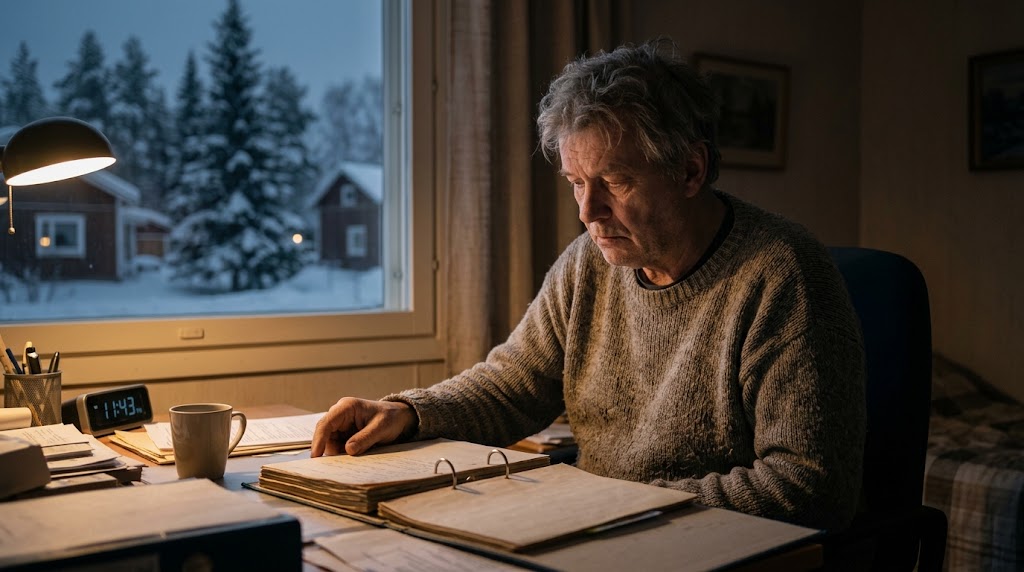
In 2012, thousands of 46-year-olds in northern Finland answered a short set of questions: how easily do you wake up, how tired are you in the first half hour, when do you prefer to work. Their answers sorted them into morning people, night owls and everyone in between. Finnish researchers then followed their work and pension records for the next 12 years. One group was far more likely to be forced out of work early.
It was the night owls. People who were evening types at 46 were about 1.7 times as likely as morning types to be granted a disability pension over the following 12 years. Among men, roughly 8.3% of night owls ended up on a disability pension, compared with 5% of morning people.
In Finland, a disability pension is not an early retirement perk. It is granted only after a long and serious decline in health that leaves someone unable to work. The link held for both men and women, and it stayed the same after the researchers accounted for education and the type of work people did.
Night owls have been under suspicion for a while. A 2018 study of 433,268 adults in the UK Biobank found that people who described themselves as definite evening types had a 10% higher risk of dying over about six years than definite morning types, along with higher rates of diabetes and psychological disorders. Other research has tied evening types to poorer health habits and more trouble in working life.
What had not been established was whether that adds up to people actually dropping out of work. This study looked at the hardest outcome available: who the state judged too sick to keep working.
The data come from the Northern Finland Birth Cohort 1966, which includes about 96% of everyone born that year in two northern provinces of Finland. Of the 5,679 people in the analysis, around 10% of men and 12% of women were classed as night owls and about 45% as morning people, with the rest in between. Their answers were linked to Finland’s national work and pension registers, so nobody had to report their own outcomes.
Over the 12 years, 135 men and 249 women received their first disability pension.
The second finding is about where the difference comes from. The researchers also checked participants’ genes and found that chronotype has a strong genetic basis, which fits earlier work showing that being a night owl is largely inborn and stable through adulthood. The higher risk does not seem to come from the type of job night owls end up in. The researchers think it comes from health.
They suggest two routes. Night owls tend to have less healthy habits, and living on a schedule that fights their internal clock can lead to chronic sleep loss and disrupted sleep. Over decades, the researchers argue, that strain can wear down health to the point where work becomes impossible.
“People who are E-type represent a significant proportion of the population and their health and ability to continue working until retirement age pose challenges for sustainable economies,” the researchers write.
For night owls, the takeaway is not that the trait is a sentence. Most evening types in the study never needed a disability pension. The findings point to sleep and everyday health habits as the places where the gap may open, and to flexible working hours as one way employers could reduce the strain. If you are a night owl struggling with sleep, that is worth raising with a doctor. Sleeping pills come with their own long-term trade-offs, as our report on first sleeping pill prescriptions showed. Cannabis is not the answer either, according to a recent study using wrist monitors.
There are limits to what this shows. The study is observational, so it cannot prove that being a night owl causes poor health or disability. Chronotype was measured once, at 46, and people’s health and circumstances may have changed in the years after.
The cohort comes from a single region of northern Finland, where long dark winters and long summer days may affect sleep in ways that differ from other places, and Finland’s pension rules are specific to Finland. The study was funded by the Finnish Cultural Foundation’s North Ostrobothnia Regional Fund, the European Research Council and the EU’s Horizon Europe programme.
Source
Räihä T, Merikanto I, Nerg I, et al. “Evening chronotype and disability pensions: 12-year register-based follow up of middle-aged adults from the Northern Finland birth cohort 1966.” Occupational & Environmental Medicine, 2026.
DOI: 10.1136/oemed-2026-110995
Also cited
Knutson KL, von Schantz M. “Associations between chronotype, morbidity and mortality in the UK Biobank cohort.” Chronobiology International, 2018.
DOI: 10.1080/07420528.2018.1454458