Scientists found a blood signature of ultra-processed diets, and it explained about half of their link to heart disease

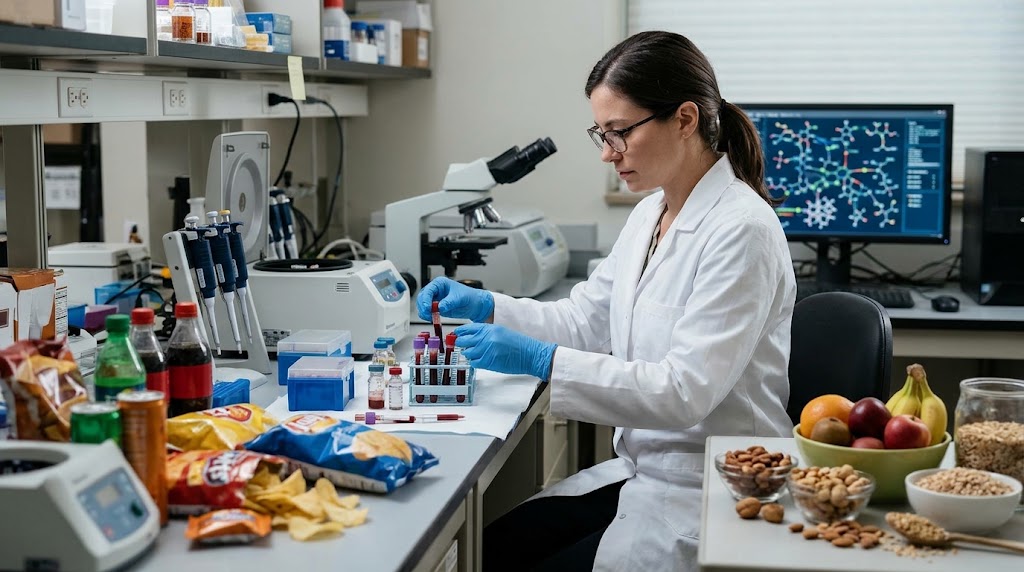
Ultra-processed food has been linked to heart disease and type 2 diabetes in study after study, but how it does the damage is unclear. Researchers at University College London and Imperial College London looked for the answer in the blood. They analyzed diets and blood samples from more than 6,000 British adults in the Whitehall II study, measuring 233 small molecules called metabolites. They then followed the participants for up to 20 years to see who developed heart disease or type 2 diabetes.
The team found a distinct blood signature for each kind of diet. Using machine learning, they identified 34 metabolites most closely linked to eating a lot of ultra-processed food and 50 linked to a diet of mostly minimally processed food, with 8 shared between them.
The ultra-processed signature had lower levels of omega-3 fatty acids and HDL, the so-called good cholesterol, and higher levels of triglycerides carried by very-low-density lipoproteins, the kind of blood fats that in excess contribute to clogged arteries. The minimally processed signature showed the opposite pattern.
That signature accounted for about half of the link between ultra-processed diets and disease: 51% of the link with later cardiovascular disease and 43% of the link with type 2 diabetes.
The link remained after the researchers accounted for the sugar, fat and salt in people’s diets. In the analysis, salt and saturated fat on their own did not appear to drive the risk of either disease, which points to something about ultra-processed diets beyond their headline nutrients.
The broader evidence on ultra-processed food is substantial. A 2024 umbrella review in The BMJ that pooled meta-analyses covering almost 10 million people linked higher ultra-processed food intake to 32 health outcomes, including heart disease deaths and type 2 diabetes. What has been missing is a biological explanation, and this study offers a partial one.
It also fits with experiments. A recent randomized trial found that an ultra-processed meal triggered a larger insulin response than a matched minimally processed meal, and a large study of ultra-processed food and colorectal cancer found that the type of ultra-processed food mattered more than the total.
The second finding is that both diets leave a mark. The minimally processed signature was linked to lower risk, so part of the harm may come not only from what ultra-processed food adds but from what it replaces, such as omega-3 rich fish and fiber-rich foods.
For everyday eating, the findings support a familiar message with a new twist: swapping some ultra-processed foods for minimally processed ones may change measurable markers in the blood that track with heart and metabolic health.
There are limits to what this shows. The study is observational, so it cannot prove cause and effect. Diet was measured with questionnaires, and the Whitehall II cohort, made up of British civil servants, is not representative of the whole population. Metabolite patterns explained only part of the link, so other factors are also involved.
Source
Wang ME, Britton A, Katsoulis M, Chang K, Vamos EP, Llewellyn CH. “Circulating metabolomic signatures of ultra-processed and minimally processed food intake and risk of cardiovascular disease and type 2 diabetes: 20-year follow-up in the Whitehall II cohort.” BMC Medicine, 2026.
DOI: 10.1186/s12916-026-05081-7
Also cited
Lane MM, Gamage E, Du S, et al. “Ultra-processed food exposure and adverse health outcomes: umbrella review of epidemiological meta-analyses.” The BMJ, 2024.
DOI: 10.1136/bmj-2023-077310