Scientists gave people two meals matched for calories, carbs, fat, protein and salt, and one of them made the body release far more insulin

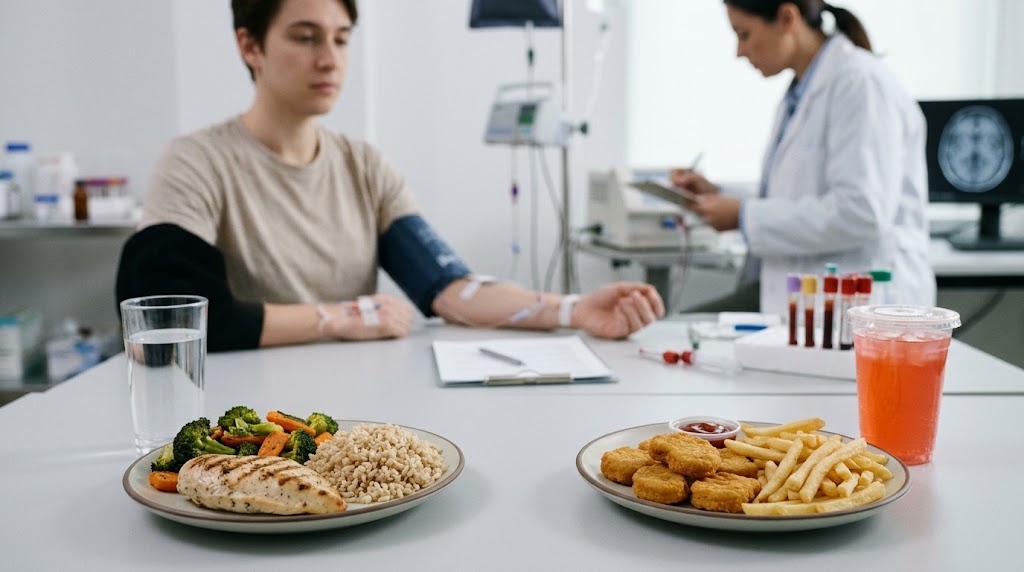
Nutrition labels assume that a calorie is a calorie: if two meals have the same energy, carbs, fat, protein and salt, the body should treat them about the same. Researchers at Virginia Tech decided to test that directly. They served 57 young, healthy adults two carefully matched meals on separate days, then took blood samples and measured how their bodies burned fuel over the next three hours. One meal did something the other did not.
The ultra-processed meal made the body release significantly more insulin than the minimally processed one, even though both contained the same calories, carbohydrates, fat, protein, water and salt, and weighed the same. Blood sugar levels overall were similar, but the insulin response was clearly higher between about 40 minutes and two hours after eating.
“What we noticed with the ultraprocessed food is that insulin response was much higher and blood sugar stays a little bit higher for a little bit longer,” one of the researchers said in a statement.
The ultra-processed meal also changed how the body used its fuel. After eating it, participants burned more energy overall but relied less on carbohydrates, a shift the researchers suggest may help explain the bigger insulin response.
That fits a growing picture that processing itself matters, not only the nutrients on the label. In a 2019 inpatient trial at the US National Institutes of Health, people on an ultra-processed diet ate about 500 more calories a day and gained weight compared with when they ate an unprocessed diet, even though both diets were matched for the nutrients offered. The new study looks at what happens in the hours after a single meal.
The study was a randomized crossover trial, meaning each person ate both meals in random order and served as their own comparison. Participants had an average age of 26 and a healthy weight. The team, led by Zach Hutelin at Virginia Tech’s Fralin Biomedical Research Institute, also used brain scans to look at how participants’ brains responded to food, and reported links between the metabolic response and brain activity.
For anyone following the debate over ultra-processed food, the result adds a twist to what we reported this week from a 19-year study of 461,682 Americans, which found that what kind of ultra-processed food people ate mattered more than the total. This trial suggests that processing can change how the body handles a meal even when the nutrients are identical.
Insulin spikes after a single meal are normal and are not a sign of disease. The researchers say the findings raise questions about what repeated responses like this could mean over months and years, which this study did not test.
There are limits to what this shows. Only 32 participants completed both metabolic sessions, and everyone was young and healthy. The two meals used different protein sources, which could have affected insulin on their own, and the study looked at one pair of meals over three hours, so it cannot say anything about long-term health.
Source
Hutelin Z, et al. “Metabolic and neural responses to ultraprocessed foods: a randomized, controlled, crossover study.” Nature Metabolism, 2026.
DOI: 10.1038/s42255-026-01619-4
Also cited
Hall KD, Ayuketah A, Brychta R, et al. “Ultra-processed diets cause excess calorie intake and weight gain: an inpatient randomized controlled trial of ad libitum food intake.” Cell Metabolism, 2019.
DOI: 10.1016/j.cmet.2019.05.008