
A liquid painted on children’s cavities in seconds stopped decay in more than half of treated teeth without drilling, but it comes with one visible trade-off

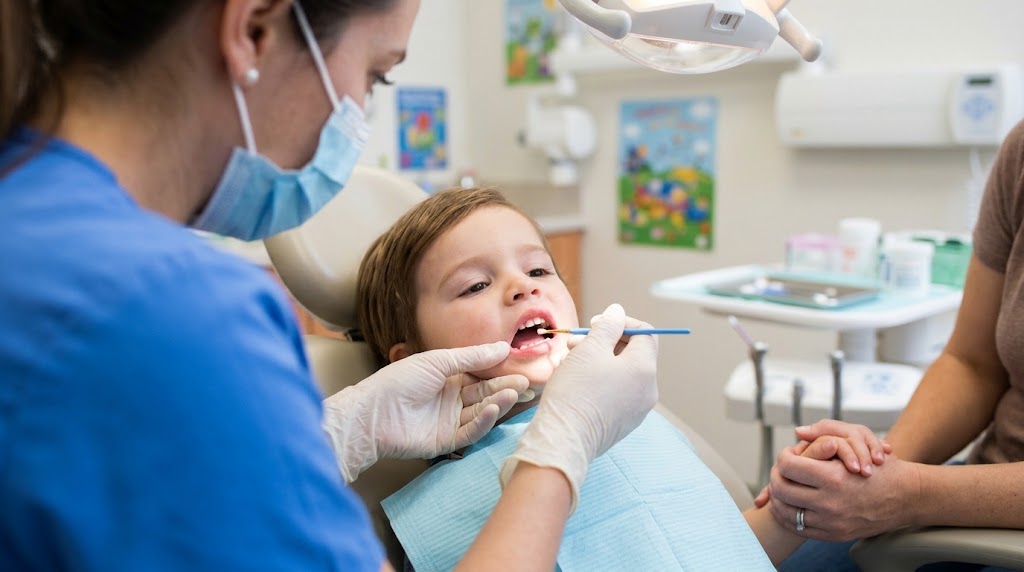
Tooth decay is the most common chronic disease in American children, affecting more than four in ten. For very young kids, treating it often means drilling, injections, or even surgery under general anesthesia. Researchers led by the University of Michigan tested a different approach in 830 children under age 6: a liquid called silver diamine fluoride, painted onto cavities with a tiny brush every six months. They tracked whether the decay in each treated baby tooth stopped progressing.
It did in more than half of the affected baby teeth. Applied every six months, a 38% silver diamine fluoride solution arrested decay, meaning the damaged area stopped getting worse, without any drilling, injections or sedation. Each application takes only seconds per tooth.
“This is a very effective and safe treatment, even in children as young as 1,” said lead investigator Margherita Fontana, a professor of dentistry at the University of Michigan.
The trade-off is visible. Silver diamine fluoride permanently turns the decayed part of a treated tooth black. On back teeth that matters little, but on front teeth some families find it a hard choice. The treatment also does not rebuild lost tooth structure the way a filling does. It stops the decay where it is.
The liquid works through two ingredients. The silver attacks the bacteria that cause decay, and the fluoride strengthens the mineral surface of the tooth so it resists further damage.
Silver diamine fluoride is not new. Dentists in many countries have used it for decades, and the US Food and Drug Administration cleared it in 2014 as a device for treating tooth sensitivity. American dentists have used it off-label for cavities, but large trials in US children had been missing. This phase III trial, which began in 2018 and was funded with more than $12 million from the National Institute of Dental and Craniofacial Research, was designed to fill that gap and support an application for FDA approval as a cavity treatment.
Children in the trial were recruited through dental clinics, pediatric practices, and Head Start and Early Head Start programs, which serve low-income families. That matters, because children in those families are more likely to have untreated decay and less likely to reach a dentist early.
The second finding is about where the treatment could go next. Young children often see a pediatrician years before their first dental visit, and the researchers argue that broader approval could let medical practices apply the liquid too, catching cavities before they become painful or infected. Every year, thousands of young children in the US end up in emergency departments with dental pain that emergency doctors cannot treat.
“Our results support FDA approval of SDF for managing arrest of tooth decay in young children,” said co-principal investigator Amr Moursi of New York University College of Dentistry.
For parents, it is a treatment worth asking a dentist about, especially for a toddler or anxious child who could not sit through a filling, as long as the family is comfortable with the dark staining. Fontana says older adults, people with disabilities, people with severe dental anxiety and anyone who struggles to get regular dental care could also benefit.
There are limits to what this shows. Decay stopped in more than half of treated teeth, which means it did not stop in all of them, and some teeth may still need further work. The trial involved children with severe early childhood decay, so results may differ for other groups. The product tested was supplied by its manufacturer, Elevate Oral Care, which can use the results in its application to the FDA.
Source
Fontana M, Moursi A, Gonzalez-Cabezas C, et al. “Efficacy of Silver Diamine Fluoride on Young Children With Severe Early Childhood Caries.” JAMA Pediatrics, 2026.
DOI: 10.1001/jamapediatrics.2026.2567