A two-year trial found fish oil supplements did reach the brain in older adults at risk of Alzheimer’s, but the benefit millions take it for never showed up


Americans spend more than a billion dollars a year on omega-3 supplements, many hoping to keep their memory sharp. The idea is simple: DHA, the main omega-3 in fish oil, is a building block of brain cells. Researchers at Keck Medicine of USC put it to a strict test, giving 365 older adults at higher risk of Alzheimer’s either high-dose fish oil or a placebo for two years, and checking whether the omega-3s actually reached their brains. They did. What happened next was the problem.
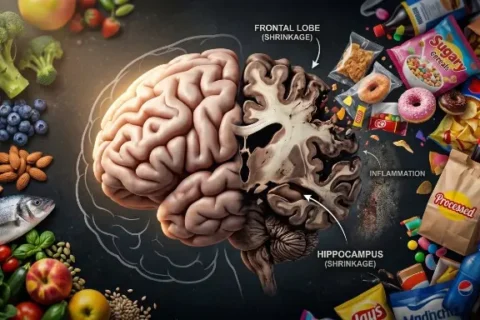
After two years, the people taking fish oil did no better on memory and thinking tests than those taking a placebo. Brain scans showed the supplement also failed to slow shrinkage of the hippocampus, the brain region at the center of memory and one of the first hit by Alzheimer’s.
That is despite clear evidence the fish oil got where it was meant to go. After six months, DHA levels in the fluid around the brain and spinal cord had risen by an average of 17% in the supplement group.
“We all wish there was a silver bullet for preventing Alzheimer’s, but our findings showed that fish oil supplements do not appear to protect brain health,” lead investigator Hussein Yassine, director of the USC Center for Personalized Brain Health, said in a statement.
The result echoes an earlier disappointment. In 2010, a trial of DHA in people already diagnosed with Alzheimer’s, published in JAMA, found that the supplement did not slow their decline. The new trial asked a different question, whether fish oil could protect people before symptoms appear, and got the same answer.
Population studies have long found that people who eat more fish, especially as part of a Mediterranean-style diet, tend to have a lower risk of dementia. The researchers suspect the difference may be that whole foods deliver omega-3s along with many other nutrients, and as part of a broader healthy lifestyle, which a capsule cannot replicate.
The trial was randomized and double-blind, so neither participants nor researchers knew who got the real supplement. The 365 adults, aged 55 to 80, rarely ate fish, and 47% carried APOE4, the strongest known genetic risk factor for late-onset Alzheimer’s. The daily dose was 2,000 mg of DHA, well above what a typical fish oil capsule provides.
The second finding is the puzzle the team is now chasing. Raising DHA in the brain was not enough to change anything measurable. Yassine’s group is investigating how the brain absorbs and uses omega-3s, and whether age, genetic risk or poor health interfere with that process.
For anyone taking fish oil for their memory, the study does not mean omega-3s are useless or that eating fish has no value. It suggests that high-dose DHA capsules alone are unlikely to protect the aging brain. “Staying healthy throughout life remains the most powerful tool we have for reducing Alzheimer’s risk, including regular exercise, quality sleep and a balanced diet,” Yassine said. Other clues to dementia risk have turned up in surprising places, from a routine blood test to differences between women and men.
There are limits to what this shows. Two years may be too short to detect benefits for a disease that develops over decades, and the trial tested a single dose of one omega-3, DHA, rather than combinations with EPA. The participants were people who rarely ate fish and were at elevated risk, so the results may not apply to everyone. The study was funded by the National Institutes of Health and the Alzheimer’s Drug Discovery Foundation.
Source
Yassine HN, Ghasem Pour S, Juarez M, et al. “CNS target engagement of high-dose DHA supplementation in older adults at risk for dementia: a randomised, double-blind, placebo-controlled trial.” eBioMedicine, 2026.
DOI: 10.1016/j.ebiom.2026.106316
Also cited
Quinn JF, Raman R, Thomas RG, et al. “Docosahexaenoic acid supplementation and cognitive decline in Alzheimer disease: a randomized trial.” JAMA, 2010.
DOI: 10.1001/jama.2010.1510