A study of 461,682 Americans followed for 19 years found ultra-processed food overall was not linked to colorectal cancer, but one kind of it was

Ultra-processed food now makes up more than half of what American adults eat, and it has become the favorite villain of modern nutrition. Colorectal cancer, rising in younger adults, is often near the top of the list of harms blamed on it. Researchers at the US National Cancer Institute tested that link in one of the largest diet studies ever run, following hundreds of thousands of adults for nearly two decades. The answer was not the one most headlines would predict.
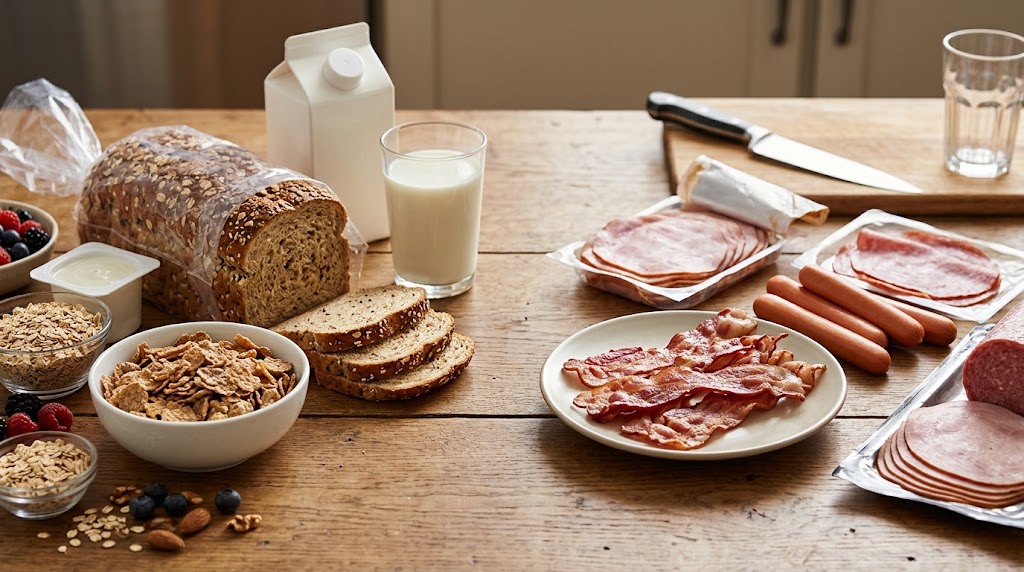
Overall, how much ultra-processed food people ate was not linked to their risk of colorectal cancer. The picture changed once the researchers split ultra-processed food into its parts. Whole grains, fiber, dairy and calcium that came from ultra-processed products, such as packaged whole-grain bread, breakfast cereals or flavored yogurt, were linked to a lower risk. Meat from ultra-processed sources, such as hot dogs, bacon and deli meats, was linked to a higher risk.
In other words, for ultra-processed food and cancer of the colon and rectum, what the food is seemed to matter more than how processed it is.
“In this large population of older US adults, we did not observe an association between total ultra-processed food intake and colorectal cancer incidence,” lead author Erikka Loftfield of the National Cancer Institute said in a statement. When the team looked at food groups, she added, the associations lined up with existing dietary advice: more whole grains and dairy, less meat.
That is a different result from some earlier research. A 2022 study in The BMJ that followed more than 200,000 US health professionals found that men who ate the most ultra-processed food had a 29% higher risk of colorectal cancer, driven mostly by processed meats and sugary drinks, while no overall link appeared in women. Both studies point at the same culprit, processed meat, even though they disagree about ultra-processed food as a whole.
The data come from the NIH-AARP Diet and Health Study, which enrolled 461,682 adults aged 50 to 71 in 1995 and 1996. Participants filled out a detailed food questionnaire, which the researchers used to estimate how much of each person’s diet was ultra-processed, and were then followed until 2018, a median of 18.8 years.
The second finding is about swaps. Replacing 10% of the weight of ultra-processed food in the diet with minimally processed food was linked to a 2% lower rate of colorectal cancer, a modest difference. The researchers say ultra-processed food should not be treated as a single category when it comes to this cancer.
For anyone trying to eat in a way that lowers colorectal cancer risk, the practical advice has not changed: eat more whole grains, fiber and dairy, and cut back on processed meat. A packaged whole-grain loaf is not in the same category as a pack of bacon, even if both count as ultra-processed.
There are limits to what this shows. Participants were mostly older white Americans, and their diets were measured only once, in the mid-1990s, so the study cannot capture how eating habits changed over two decades or how much more ultra-processed food is available today. The researchers say this may have led them to underestimate actual intake, and that the results may not apply to younger or more diverse groups, the people among whom colorectal cancer is rising fastest.
Source
Abar L, O’Connell CP, Hong HG, et al. “Associations of food processing and dietary risk factors with colorectal cancer incidence in the NIH-AARP Diet and Health Study: A cohort study.” PLOS Medicine, 2026.
DOI: 10.1371/journal.pmed.1005251
Also cited
Wang L, Du M, Wang K, et al. “Association of ultra-processed food consumption with colorectal cancer risk among men and women: results from three prospective US cohort studies.” The BMJ, 2022.
DOI: 10.1136/bmj-2021-068921