New research found that a psychopath’s brain is physically built differently and it explains why they cannot feel what you feel

You have probably met one. They were charming, confident, and oddly unaffected by things that would devastate most people. Nothing seemed to land on them the way it lands on you. No guilt after causing harm. No discomfort watching someone cry. No brake on behavior that anyone with normal emotional wiring would instinctively avoid.
For a long time, the explanation for this was purely psychological. Bad upbringing. Learned manipulation. A choice, conscious or otherwise, to switch off empathy. But a convergence of brain imaging research culminating in findings highlighted in May 2026 is telling a structurally different story. The psychopathic brain is not a normal brain that decided to stop caring. It is a physically different brain, built differently, wired differently, and operating on a fundamentally altered reward and emotional architecture that makes feeling what you feel not just unlikely but in many cases biologically impossible.
The Brain Region That Is 10 Percent Too Large
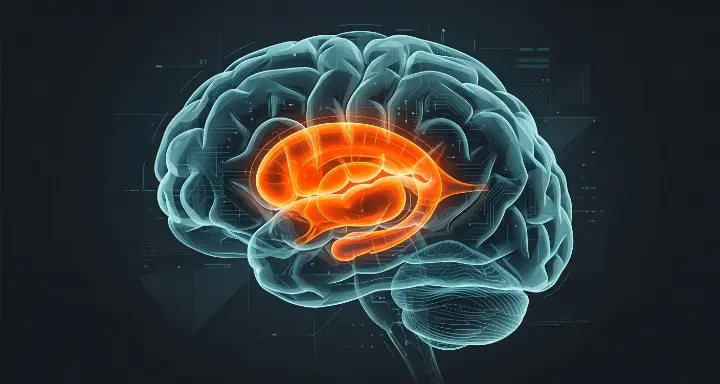
The most striking structural finding comes from research led by neuroscientists at Nanyang Technological University in Singapore, in collaboration with the University of Pennsylvania and California State University. Using MRI scans and the Psychopathy Checklist-Revised, one of the most rigorous clinical instruments for identifying psychopathic traits, the team examined 120 adults and found a consistent and measurable difference in a single brain region: the striatum.
In individuals with strong psychopathic traits, the striatum was on average 10 percent larger than in people with few or no such traits. This was not a subtle statistical variation. It was a structural difference large enough to see on a scan, replicated across participants, and present in both male and female subjects, the first time the female finding had been confirmed at this scale.
The striatum sits deep in the forebrain and coordinates a remarkable range of functions: motor planning, decision-making, motivation, reinforcement, and critically, how the brain processes and responds to rewards. It is the hardware that tells you how good something feels, how much you want it, and how far you will go to get it again. An enlarged striatum doesn’t create more empathy or more emotional depth. It creates more drive, more impulsivity, and a chronically elevated appetite for stimulation that ordinary social and legal constraints struggle to satisfy.
Professor Adrian Raine, one of the world’s leading researchers on the neuroscience of antisocial behavior and a co-author on the study, put it plainly: psychopaths go to extreme lengths to seek out rewards, including criminal activities involving property, sex, and drugs. The enlarged striatum is the neurobiological underpinning of that relentless, impulsive drive. The brain is not malfunctioning by its own internal logic. It is optimized for reward-seeking in a way that overrides the social and emotional braking systems most people rely on without thinking.
The Regions That Are Too Small
While the striatum story explains the relentless drive of psychopathic behavior, a separate line of research explains the emotional absence, the flatness, the inability to register someone else’s suffering as a reason to stop.
A 2025 study published in the European Archives of Psychiatry and Clinical Neuroscience examined 39 adult men diagnosed with psychopathy alongside matched controls, using advanced neuroimaging and the Julich-Brain Atlas to map structural differences with precision. What it found was not enlargement but reduction, widespread shrinkage across multiple brain regions that together form the emotional and behavioral control system of the human mind.
Individuals with high antisocial psychopathy scores showed reduced volumes in the basal ganglia, thalamus, basal forebrain, pons, cerebellum, orbitofrontal cortex, dorsolateral-frontal cortex, and insular cortex. These are not peripheral regions. The orbitofrontal cortex is where emotional consequences of actions are processed and used to guide future behavior. The insular cortex is where empathy is physically generated, where the felt sense of another person’s pain registers as something real and relevant. The thalamus acts as the brain’s central relay station, routing sensory and emotional signals to the regions that need to respond to them.
When these regions are structurally reduced, the circuits that normally translate social information into emotional response are compromised at the hardware level. The person isn’t choosing to suppress empathy. The biological infrastructure for generating it is physically diminished. The researchers described these findings as pointing to dysfunctions in specific frontal-subcortical circuits known to be relevant for behavioral control, a technical way of saying that the brain’s internal braking system is running on significantly less tissue than it should be.
Two Separate Problems in One Condition
What makes this structural picture particularly important is that it maps onto the two distinct dimensions of psychopathy that clinicians have long observed but struggled to explain.
The first dimension involves interpersonal and emotional traits: the pathological lying, the shallow affect, the manipulativeness, the complete absence of remorse or guilt. The second dimension involves the behavioral and lifestyle expression: the impulsivity, the criminal versatility, the parasitic relationships, the chronic irresponsibility.
The brain data suggests these two dimensions have partially separate neurological roots. The enlarged striatum most strongly predicts the behavioral dimension, the relentless reward-seeking and inability to inhibit destructive impulses. The reduced volumes in the frontal and subcortical regions most strongly predict the emotional dimension, the flatness, the absence of felt empathy, the missing internal register of what actions cost other people.
This is not a personality that decided to become dangerous. It is a brain architecture in which the accelerator is structurally enlarged and the brakes are structurally reduced, operating simultaneously, from the moment of development.
The Question Nobody Wants to Ask
Understanding that psychopathic behavior is rooted in measurable brain differences doesn’t erase the harm it causes. It doesn’t make victims less harmed or criminal accountability irrelevant. What it does is force a more precise reckoning with what we are actually dealing with when we encounter this pattern of behavior in the world.
Estimates suggest that roughly 1 percent of the general population meets the clinical threshold for psychopathy. In prison populations, that figure rises to approximately 15 to 25 percent. These individuals are dramatically overrepresented in violent recidivism statistics and account for a disproportionate share of serious and persistent harm across every society that has measured the data.
The researchers are clear that genetics, development, life experiences, and environment all interact to shape how these brain differences emerge. An enlarged striatum is not a destiny. But it is a biological predisposition that requires understanding on its own structural terms, not just moral ones. The question of what to do with this knowledge, in criminal justice, in early identification, in therapeutic approaches, is one the data is now forcing into the open.
What Makes a Person Feel What You Feel
For most people, empathy is so automatic that it feels like a basic feature of being human rather than a specific biological system that can be intact or damaged. You see someone fall and you wince. You watch someone cry and something in your chest responds before your mind has processed anything consciously. That response is not a choice. It is the insular cortex, the orbitofrontal cortex, and the mirror neuron networks doing exactly what a structurally intact brain does automatically.
The brain imaging data is showing that in psychopathic individuals, the tissue that generates those responses is measurably reduced. The response doesn’t happen not because the person decided against it but because the hardware that produces it is operating at a structural deficit. That person is not experiencing your reality. They are experiencing a version of it from which the felt dimension of other people’s suffering has been architecturally removed.
That is not an excuse. It is an explanation. And understanding the difference may be the most important thing the neuroscience of psychopathy has to offer.
Sources:
1. NTU striatum enlargement study (Journal of Psychiatric Research, highlighted May 2026) Choy, O., Raine, A., Schug, R. Larger striatal volume is associated with increased adult psychopathy. Journal of Psychiatric Research, 2022; 149: 185. DOI: 10.1016/j.jpsychires.2022.03.006 https://www.sciencedaily.com/releases/2026/05/260510030946.htm
2. Frontal-subcortical brain network reductions (European Archives of Psychiatry and Clinical Neuroscience, 2025) Pieperhoff, P., Hofhansel, L., Schneider, F., et al. Associations of brain structure with psychopathy. European Archives of Psychiatry and Clinical Neuroscience, 2025. DOI: 10.1007/s00406-025-02028-6 https://link.springer.com/article/10.1007/s00406-025-02028-6
3. Functional brain network meta-analysis across 38 neuroimaging studies (Neuroscience and Biobehavioral Reviews, 2025) A network-level view of psychopathy: meta-analysis of 38 functional neuroimaging studies. Neuroscience and Biobehavioral Reviews, 2025. https://medicalxpress.com/news/2025-06-brain-networks-underlying-psychopathy.html