New findings suggest aging might be more reversible than previously thought

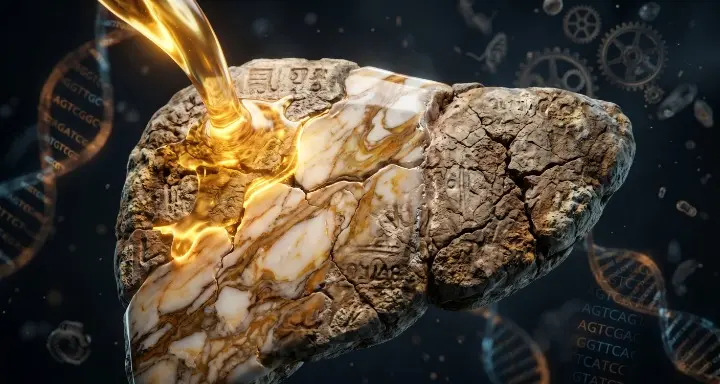
Eight months of biological decay disappeared in just twenty-one days. This was the reality for aged mice, which were nearly geriatric, before a team from UCSF and other institutions intervened. By switching on a single transcription factor, a protein that serves as a master switch for DNA, they managed to remove the metabolic deterioration that had built up over a lifetime. The mice didn’t just feel better; their livers physically transformed into a younger state.
For years, the gold standard for reprogramming cells has been the Yamanaka factors. These four powerful proteins can change an old skin cell into a blank-slate stem cell. However, there is a drawback. If you convert a cell into a stem cell in a living being, you often end up with a tumor. The challenge has been to find a way to rejuvenate a cell without forcing it to lose its identity. You want your liver to be young, but it still needs to function as a liver.
The Search for the Reset Button
Janine Sengstack and Hao Li didn’t just guess which genes might work. They created a massive discovery platform called TRDP, the Transcriptional Rejuvenation Discovery Platform. Think of it as a biological search engine that scans the entire genome to identify the specific “buttons” that can reset an old cell to a younger state. They compared the genetic signatures of young and old human skin cells, then used a technique called Perturb-seq to test 400 different genetic changes.
They weren’t looking for a slowdown. They were looking for a reversal. The result was a shortlist of about a dozen candidates, with four specific factors emerging as top performers: E2F3, EZH2, STAT3, and ZFX. These are the keys to a puzzle we have been trying to solve for decades.
The Four Mechanics of the Cell
Each of these four factors operates as a different kind of biological mechanic. When the researchers tested them on old human skin cells, the effects were nearly instantaneous.
E2F3 acts as the accelerator; it jumpstarts cellular proliferation, prompting old, sluggish cells to begin dividing again. EZH2 functions as the energy specialist; it specifically targets the mitochondria, the powerhouses of your cells, to increase energy production. STAT3 and ZFX serve as the cleanup crew. They enhance proteostasis and lysosome function, which is essentially the cell’s internal waste disposal system. In old age, these disposal systems often become clogged with biological waste. By adjusting STAT3 or ZFX, the researchers could clear the blockages and restore the cell’s ability to self-clean.
The most crucial finding is that the cells retained their identity. Unlike the Yamanaka factors, these switches did not erase the cell’s characteristics. They didn’t transform the skin cells into stem cells or cancer cells. They simply turned them into young skin cells. This is rejuvenation without dedifferentiation, representing a vital piece of the longevity puzzle.
A Three-Week Miracle for the Liver
Testing cells in a dish is one thing; testing them in a living animal raises the stakes. The team prioritized EZH2 for their mouse study because it has a better safety profile and a clear connection to liver health. They used 20-month-old mice, equivalent to humans in their late 60s, and gave them a three-week treatment aimed at boosting EZH2 levels in the liver.
The results were surprising. Within twenty-one days, the aging livers experienced a 50 percent reduction in steatosis (fatty buildup) and fibrosis (scarring). The mice’s glucose tolerance—the ability to process sugar—improved to levels typical of much younger mice. In three weeks, the researchers effectively reversed eight months of liver aging.
This is significant because the liver is central to your metabolic health. When it fails, everything from your energy levels to your lifespan suffers. If a single protein can remove the scars of a lifetime in a matter of weeks, we could be looking at a future where organ failure is treated by resetting the organ’s internal genetic clock.
The Cancer-Free Biological Scrub
One major concern in longevity research is cancer. Anything that accelerates cell division—like E2F3 or EZH2—raises a red flag for tumor growth. However, the Sengstack study closely examined the genetic signatures of their rejuvenated cells and compared them to several cancer models.
The signatures were significantly different. The rejuvenated cells did not behave like cancer; they acted like healthy, young cells. They enhanced metabolic function and decreased inflammation, while cancer models typically show poor metabolism and high stress. The researchers even investigated “mesenchymal drift,” an aging signature, and found that their factors partially reversed it.
The researchers are cautious to note that they only studied this for three weeks. The long-term effects remain unknown. Still, the proof of concept is clear. We now have a platform capable of pinpointing the exact genetic levers necessary to repair a specific organ or cell type. This isn’t about discovering a fountain of youth in a pill. It’s about creating a library of genetic solutions that can rejuvenate tissues nearing failure. Your liver, your skin, and perhaps eventually your entire body could be reset by a single, targeted genetic adjustment.