
Researchers found a one-cent pricing trick that made people more willing to order smaller portions, and it only worked on the small plates

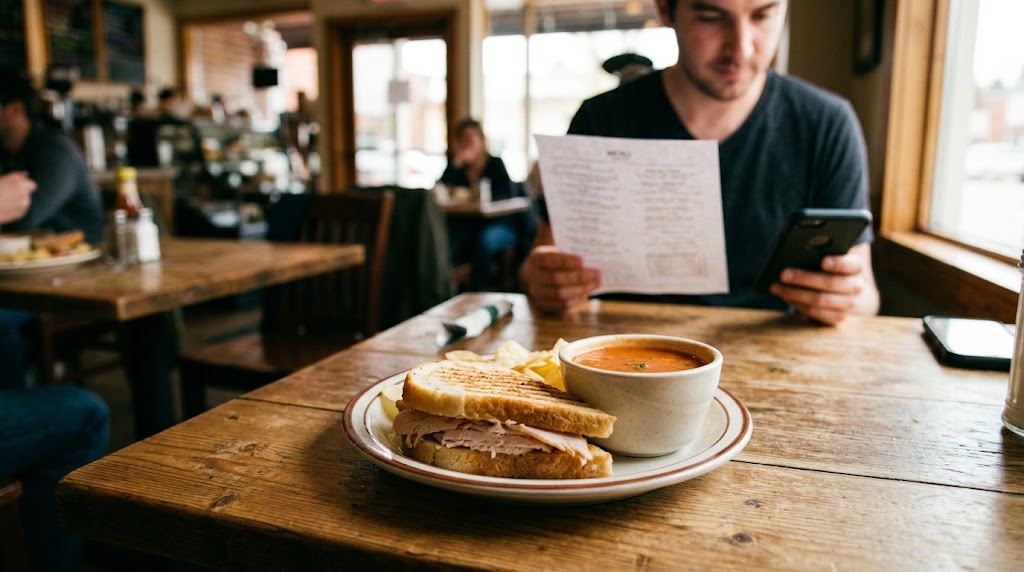
Ordering a half sandwich and a cup of soup often feels like a bad deal: you get half the food, but nowhere near half the price. A PhD student at Ohio State University noticed this during the pandemic, when she was ordering a lot of half-sized sandwiches, and turned it into a study. Her team showed adults images of either a small or a regular-sized meal, priced either with a round number or with a price ending in .99. They then asked how fair the price seemed and how likely people were to order.
One cent made a difference, but only for the small plate. A small meal priced at $7.99 seemed fairer than the same meal at $8.00, and people were more likely to say they would order it. For the regular-sized meal, $11.99 versus $12.00 made no difference.
“It’s just one cent difference. But psychologically, consumers feel so much better: ‘It’s fair. Now I can order the small plate,’” said senior author Stephanie Liu, an associate professor of hospitality management at Ohio State.
The explanation is about what people expect from small portions. Customers often feel that a reduced portion is not reduced enough in price. A price ending in .99 signals a discount, which takes the edge off that feeling of unfairness. For regular meals, there is no comparison to feel cheated by.
“The rationale is that the nonrounded price will always signal a sense of a discount,” said first author Xi Yu. “For the regular plates, people don’t actually care about whether you give them a rounded or nonrounded price.”
The second finding is about who benefits. Restaurants increasingly offer smaller plates for people who want less food, are trying to eat less, or want to try more dishes. If small plates feel unfair, people may order the full portion and waste food, or skip ordering altogether. A pricing tweak that makes small plates feel fair could help both restaurants and customers who want to eat less.
Just-below pricing has a long history in retail, but earlier research at Ohio State has shown it can also backfire, for example by making a price jump across a round number feel bigger and discouraging people from upgrading. The new study suggests it works best where customers already suspect they are being shortchanged.
For diners, the practical point is to notice the trick: a penny off does not make a small plate a better deal, it only makes it feel like one. What and how much we eat is shaped by small cues, from what goes into a cup of coffee to which processed foods end up on the plate.
There are limits to what this shows. Participants reacted to images and said what they would do, rather than ordering real food in a restaurant, and the study tested one type of meal at two price points. Real menus, real hunger and real prices may change the result.
Source
Yu X, et al. “Effective price framing strategies for promoting small plates.” Journal of Hospitality and Tourism Management, 2026.
DOI: 10.1016/j.jhtm.2026.101520