New research finds that CAR T-cell therapy, developed for blood cancers, dramatically reduced disease activity in every rheumatoid arthritis patient treated. Three achieved medication-free remission after a single infusion.

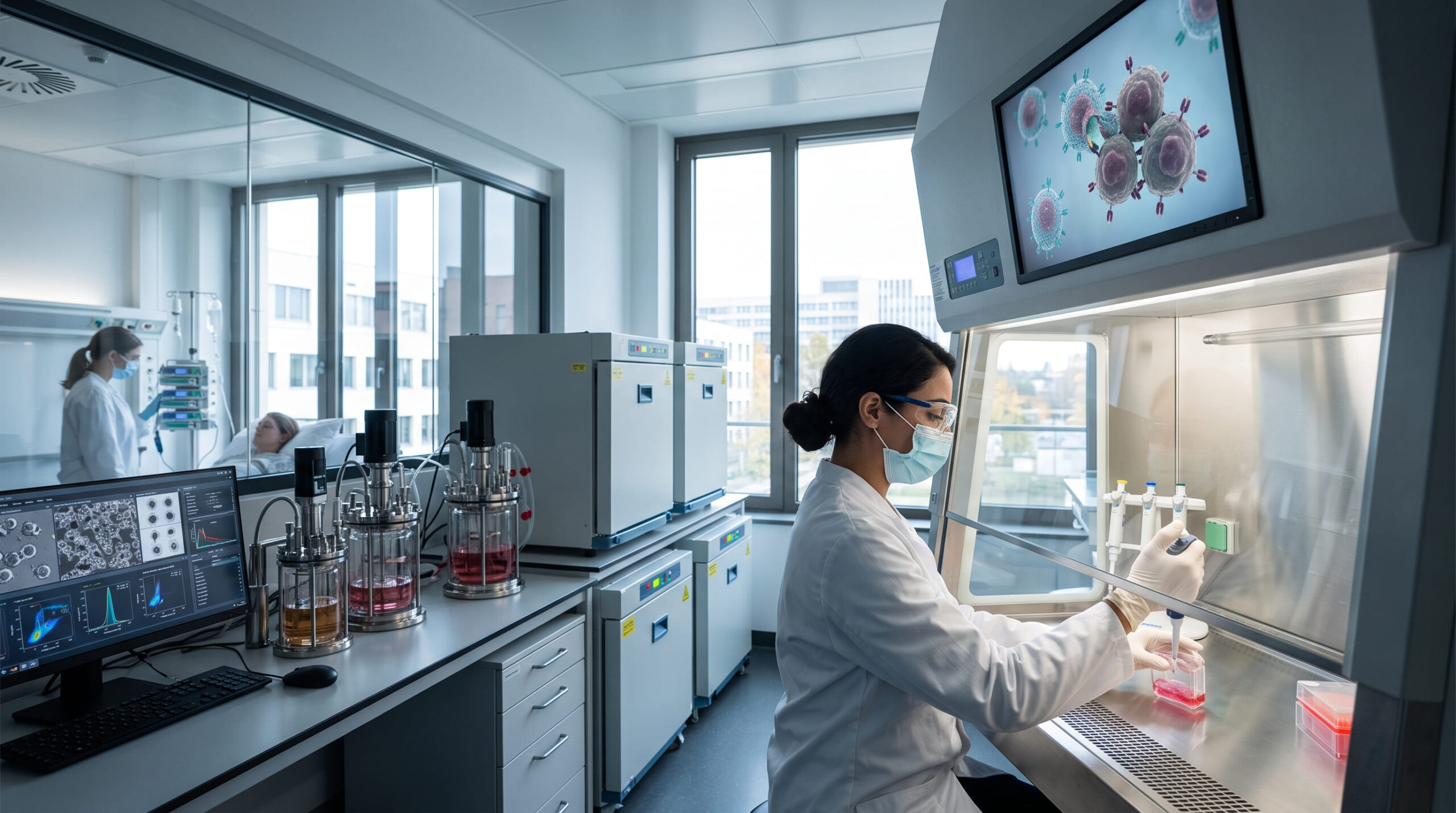
CAR T-cell therapy emerged from cancer research as one of the most targeted biological interventions ever developed. The approach engineers a patient’s own immune T cells to recognize and destroy specific cells carrying a particular surface marker. In certain blood cancers, particularly B-cell leukemias and lymphomas, it has produced remissions that older therapies could not achieve and that have, in some patients, persisted for years. The FDA has approved several CAR T-cell products for cancer indications, and the field has grown rapidly since the first approvals in 2017.
The underlying biology suggested a broader potential application that cancer researchers began exploring seriously in recent years. Autoimmune diseases, in which the immune system attacks the body’s own tissues, are driven by specific immune cell populations. If CAR T cells could eliminate cancer B cells, might they also eliminate the autoreactive B cells responsible for driving conditions like systemic lupus, inflammatory myositis, or rheumatoid arthritis?
A clinical study published today in Nature Medicine, conducted at Charité Universitätsmedizin Berlin, has now tested this question directly in rheumatoid arthritis, one of the most common and most debilitating autoimmune conditions in the world.
The results from six patients are striking enough to change how researchers think about the treatment landscape for severe autoimmune disease.
What rheumatoid arthritis does and who it fails
Rheumatoid arthritis is not the joint wear-and-tear of osteoarthritis. It is an autoimmune condition in which the immune system mistakenly identifies the synovial membrane lining the joints as a target, producing chronic inflammation that destroys cartilage and bone over time. The condition affects approximately 18 million people worldwide and causes progressive joint damage, disability, and significant reductions in quality of life.
Current treatment begins with conventional drugs including methotrexate and follows a stepped escalation through increasingly advanced therapies if earlier lines fail. Biologic drugs targeting specific inflammatory molecules, including TNF inhibitors, IL-6 blockers, and B-cell depleting agents like rituximab, have transformed outcomes for many patients since the early 2000s. Targeted synthetic drugs called JAK inhibitors added another option. For patients who respond to these treatments, the disease can be significantly controlled.
But a substantial proportion of patients cycle through multiple drug classes without achieving adequate disease control. For them, the options eventually run out. The disease continues progressing, joint damage accumulates, and quality of life deteriorates despite ongoing treatment attempts.
It was exactly this population that the Berlin team recruited for their CAR T-cell trial.
What happened to the six patients
All six participants had severe, active rheumatoid arthritis that had not responded adequately to multiple prior therapies. The researchers used CD19-targeted CAR T cells, identical in basic design to the CAR T products used in B-cell malignancies. CD19 is a surface marker present on B cells throughout their development. Infusing CAR T cells engineered to target CD19 depletes the B cell population broadly, eliminating both normal B cells and, crucially, the autoreactive B cells that drive rheumatoid arthritis pathology through antibody production and inflammatory signaling.
Each patient received a single infusion following a brief conditioning regimen to prepare the immune system. They were then monitored closely for safety and disease activity at regular intervals.
The outcomes were consistent across all six patients. Every participant showed clinically meaningful reductions in disease activity measures. The DAS28-CRP score, a validated composite measure of rheumatoid arthritis severity combining joint tenderness, joint swelling, patient global assessment, and a blood inflammatory marker, fell substantially in all six.
Three of the six patients achieved a state of clinical remission by standard definitions and were able to discontinue all arthritis medications. They remained in drug-free remission at follow-up. The other three patients showed significant improvement and continued to benefit from the treatment, though they did not reach full remission criteria.
No serious adverse events were reported. The most notable expected side effect of B-cell depletion, reduced resistance to infection due to lower antibody levels, was monitored closely but did not produce serious infections in the follow-up period. The CAR T-cell infusion was tolerated without the severe cytokine release syndrome that has complicated some cancer CAR T protocols, likely reflecting differences between the dense tumor burden in cancer patients and the more diffuse autoimmune cell population targeted in rheumatoid arthritis.
“CAR T-cell treatment was well tolerated with clinical improvement seen in all patients,” the researchers reported.
Why B cell depletion works here
The rationale for targeting B cells in rheumatoid arthritis is well established even before this study. The biologic drug rituximab, which depletes B cells using a different mechanism, has been an approved treatment for rheumatoid arthritis for nearly two decades. Its efficacy confirmed that B cells play a central role in driving joint inflammation in this disease.
What CAR T-cell therapy offers beyond rituximab is depth and potentially durability of B-cell depletion. Rituximab depletes B cells transiently, with B-cell populations recovering after months to years as new B cells emerge from the bone marrow. Many patients who initially respond to rituximab eventually require retreatment as the disease returns with B-cell recovery.
CAR T cells function differently. After infusion, the engineered cells expand, patrol the body for CD19-positive cells, and can establish a long-lived memory population that continues to suppress B-cell recovery over time. In cancer patients, this persistence is associated with more durable responses than rituximab-based approaches. The hypothesis the Berlin study tested is whether the same principle applies in autoimmunity: that a single CAR T infusion might produce a deeper and more sustained B-cell depletion that allows the autoreactive immune landscape to reset in a way that transient depletion cannot achieve.
The preliminary results are consistent with that hypothesis. The three patients in complete remission had discontinued all medication, meaning their disease was controlled without ongoing pharmacological suppression. Whether this represents a true immune reset that will persist long-term or a remission that will eventually relapse as immune populations recover is the central question that longer follow-up will need to answer.
What this study does and does not establish
The study is a phase one clinical investigation in six patients. This is the smallest possible scale at which meaningful human data can be collected. Six patients cannot establish the efficacy, long-term safety, or generalizability of a treatment. They can establish that the approach is biologically plausible in humans, that it does not cause obvious catastrophic harm, and that a signal worth pursuing exists.
All of these were established. The study was not designed or powered to prove that CAR T-cell therapy works for rheumatoid arthritis. It was designed to ask whether it is safe enough and promising enough to warrant larger trials.
The population was specifically selected for severity and treatment resistance. The three patients who achieved drug-free remission had previously failed multiple biologic and targeted therapies. Whether CAR T-cell therapy would produce similar results in patients with less severe or treatment-naive rheumatoid arthritis is unknown. The biology suggests it might be most useful precisely in the treatment-resistant population, where other options have been exhausted and the benefit-risk ratio of an intensive one-time intervention is most favorable.
The cost of CAR T-cell therapy in cancer is extremely high, typically several hundred thousand dollars per infusion, limiting access severely. Whether rheumatoid arthritis indications would carry similar costs, whether they could be negotiated differently given the much larger patient population, and how payers would approach coverage are questions that remain entirely open at this stage of research.
What the study establishes is a biological proof of concept in humans at the scale of an early phase trial: the same therapeutic approach that depletes malignant B cells in cancer appears to deplete autoreactive B cells in rheumatoid arthritis, producing clinical responses including complete drug-free remission in some patients who had no remaining conventional options.
Where the field goes from here
Rheumatoid arthritis is not the first autoimmune condition in which CAR T-cell therapy has produced striking early results. Prior small studies at Erlangen University Hospital in Germany demonstrated similar findings in systemic lupus erythematosus, inflammatory myositis, and other autoimmune conditions. The Berlin study extends that early signal specifically to rheumatoid arthritis with the most rigorous characterization yet of the treatment’s effects on immune cell populations.
The pattern emerging across these early autoimmune CAR T studies is consistent: deep B-cell depletion following CAR T infusion, followed by B-cell recovery from naive precursors that appear to lack the autoreactive programming of the original cells, producing what some researchers describe as an immune reset. The working hypothesis is that this reset allows immune tolerance to re-establish in a way that sustained conventional immunosuppression cannot achieve.
The path from six-patient proof of concept to standard clinical practice is long and uncertain. Randomized controlled trials with larger populations, longer follow-up, more diverse patient groups, and head-to-head comparisons with existing biologics are all required before any change in treatment guidelines would be appropriate. The therapy is invasive, expensive, and requires specialized facilities.
But for patients who have exhausted available options and whose disease continues progressing despite multiple treatment attempts, the prospect of a single infusion producing drug-free remission is, at minimum, a direction worth pursuing urgently.
The study, “CD19 CAR T cell treatment of patients with severe, treatment-refractory rheumatoid arthritis”, was authored by Fredrik N. Albach, Marie C. Rehm, and colleagues at Charité Universitätsmedizin Berlin, and published August 29, 2026 in Nature Medicine.
Source: Charité Universitätsmedizin Berlin. DOI: 10.1038/s41591-026-04572-7