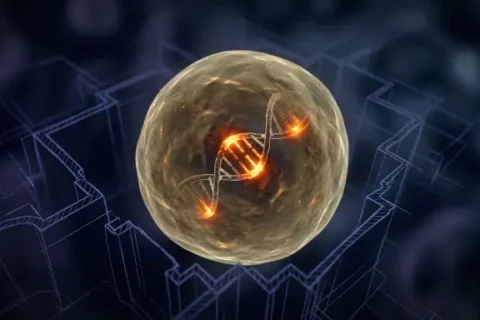
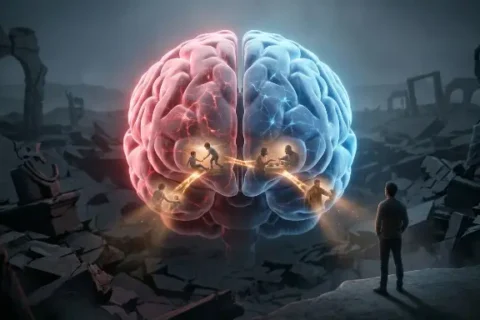
Scientists measured biological aging in 2,300 people and found each toxic person in your life adds roughly 9 months to your cellular age. The effect is twice as strong when the toxic person is a family member.

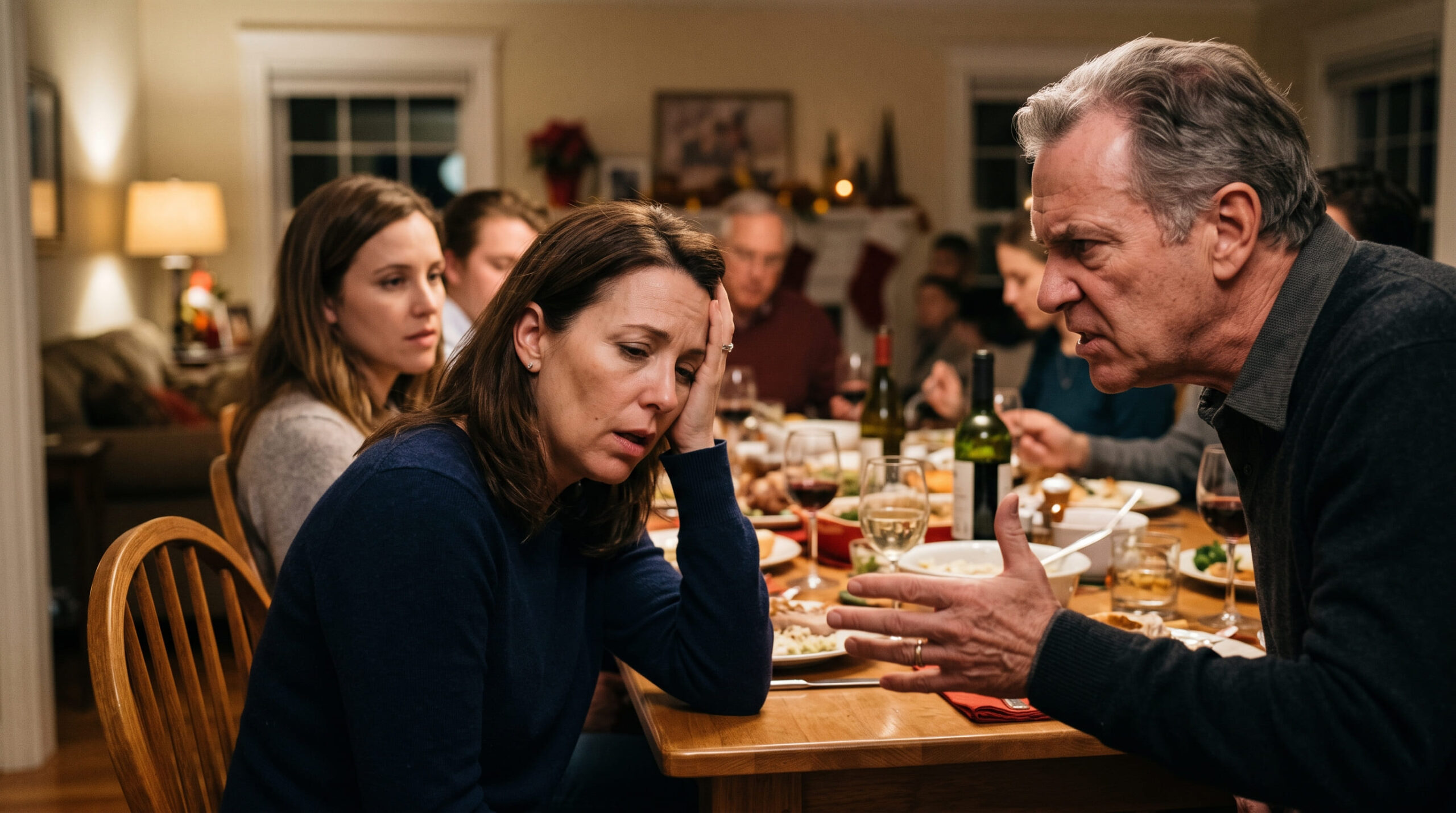
Most people intuitively understand that difficult relationships take a toll. The colleague who creates constant friction, the friend who calls only when they need something, the family member whose presence produces dread rather than comfort. These relationships feel costly. The assumption has always been that the cost is emotional: stress, resentment, depletion. The body, in this model, is a bystander that absorbs the feeling and eventually recovers.
A study published in PNAS, the Proceedings of the National Academy of Sciences, has challenged that model with biological evidence from 2,300 adults. The toll of difficult relationships is not merely emotional. It is measurable in DNA.
Researchers led by Byungkyu Lee at New York University and Brea Perry at Indiana University recruited a state-representative probability sample of adults in Indiana as part of a broader study of social networks and health. Participants identified their close social networks, specifically naming people who regularly made their lives more difficult. The research team called these individuals “hasslers,” defined as people in one’s close network who create problems, cause stress, or make everyday life harder. Participants also provided saliva samples from which the team extracted DNA.
The saliva samples were analyzed using two independently validated epigenetic aging clocks: DunedinPACE and age-accelerated GrimAge2. Unlike chronological age, which simply counts years since birth, epigenetic clocks measure the pace at which cells are accumulating molecular wear. They track DNA methylation patterns that shift predictably under chronic stress and in the direction of faster biological deterioration. These clocks predict mortality risk and health outcomes more accurately than birth year and have been validated across multiple large-scale longitudinal studies.
The results were specific. Each additional hassler in a participant’s social network was associated with approximately 9 months of faster biological aging on the DunedinPACE clock. Nearly 30% of participants reported having at least one hassler in their close network, meaning this is not a rare exposure. Nearly one in three adults is carrying this biological cost right now.
Why family members cause the most damage
The study’s most striking finding emerged when the researchers separated hasslers by relationship type. Not all difficult relationships produced the same biological effect.
Difficult acquaintances and peripheral contacts showed limited association with accelerated aging. Difficult friends showed a meaningful association. But difficult family members, defined as kin within one’s close network who regularly caused stress or problems, produced accelerated aging effects that were substantially larger than any other relationship type.
The biological logic is straightforward once stated. You can reduce contact with a difficult colleague or quietly drift from a difficult friend. Family relationships are structurally different. They carry expectations of permanence, they are embedded in broader kinship networks, and they are significantly harder to exit without social consequences. The result is that stress from a difficult family member tends to be chronic rather than episodic, repeated at family events and holidays, present in the background of major life decisions, and harder to mentally resolve through the normal mechanisms of distance or avoidance.
“Each additional hassler is associated with faster biological aging, with especially pronounced effects when the hassler is a family member,” the researchers wrote. “These findings identify negative social ties as chronic stressors that shape aging trajectories and underscore the need for interventions that reduce harmful social exposures to promote healthier aging.”
The mechanism the researchers propose runs through the body’s stress response system. Chronic interpersonal stress activates the hypothalamic-pituitary-adrenal axis, elevating cortisol and triggering a sustained inflammatory response. Over time, chronic low-grade inflammation is one of the most reliable accelerators of cellular aging, contributing to the methylation changes that epigenetic clocks detect. The hassler, in this model, functions as a persistent environmental stressor that keeps the body’s threat-detection system partially activated, producing the same kind of biological wear typically associated with financial hardship, workplace burnout, or neighborhood disadvantage.
Who is most likely to have hasslers
The pattern of who reports having difficult people in their networks is not random. It tracks closely with existing social and health vulnerabilities.
Women were more likely than men to report having hasslers. Daily smokers were more likely to report them than non-smokers. People in poorer health were more likely to report them. And perhaps most significantly for thinking about the long-term consequences, people who reported adverse childhood experiences were substantially more likely to have hasslers in their current adult networks.
This clustering is important because it means the biological burden of difficult relationships does not fall evenly. The same people who face other chronic stressors, poverty, poor health, histories of trauma, are disproportionately likely to also be carrying the additional aging burden of difficult relationships. Adversity compounds.
The researchers also found that hasslers tended to occupy particular structural positions within networks. They were more likely to be connected to participants through weak, peripheral ties rather than being central, densely connected members of the social group. This is counterintuitive, since the most prominent members of a network might be expected to have the most influence. But it suggests that even relatively peripheral relationships, contacts who are not central to daily life but who appear repeatedly and reliably create stress when they do, carry enough chronic exposure to produce measurable biological effects.
What this adds to the science of social relationships
Research on social relationships and health has historically focused almost exclusively on social support: the presence of close, caring relationships that buffer stress, encourage healthy behaviors, and provide resources in times of difficulty. That literature is robust and the effects are real. Loneliness and social isolation are associated with worse health outcomes, and strong social networks are associated with better ones.
What this study adds is the complementary picture: negative ties within social networks cause biological harm that operates independently of the benefits of positive ties. Having supportive people in your life does not fully protect against the aging effects of difficult people in the same network. The positive and negative dimensions of social relationships appear to affect health through partially separate pathways.
“Social relationships are fundamental to human health, yet research has focused primarily on their supportive dimensions,” the researchers wrote. “We investigate the role of hasslers, people in one’s close social networks who create problems or make life more difficult, finding that these negative ties are not rare, disproportionately experienced by individuals facing greater social and health vulnerabilities, and consequential for aging.”
What the study does not establish
The finding that more difficult people in your network correlates with faster biological aging does not prove that removing those people would slow your aging. The study is cross-sectional, meaning it captures a snapshot at one moment in time rather than tracking people across years. A critic, and one was published as a commentary in the same journal shortly after the original paper, has noted that the reverse direction of causality is plausible: people who are aging faster may be experiencing declining health that makes social relationships more difficult, attracting or generating conflict rather than simply being exposed to difficult people independently.
The researchers acknowledge this limitation directly. The epigenetic clocks they used, while powerful population-level tools, also have sensitivity to technical factors including batch effects and cell-type composition, and the field is still working through the methodological challenges of using them in social science research.
The sample, while state-representative for Indiana, may not generalize to other regions, countries, or demographic groups. And the definition of a hassler, a person who makes your life more difficult, is self-reported, which means it reflects participants’ perceptions rather than an objective measure of how difficult a given relationship actually is.
Despite these limitations, the study is one of the first to use epigenetic aging clocks to examine negative social ties specifically, and to do so in a large, population-representative sample. The finding that family hasslers produce larger aging effects than non-family hasslers is internally consistent and biologically interpretable. Whether intervening on those relationships, through boundary-setting, reduced contact, or therapeutic processing of difficult family dynamics, would produce measurable changes in the pace of biological aging is a question that will require longitudinal research to answer.
What the study establishes clearly enough to matter is that the people who make your life harder are not merely making your days worse. They are, on average, making your cells older.
The study, “Negative social ties as emerging risk factors for accelerated aging, inflammation, and multimorbidity”, was authored by Byungkyu Lee, Gabriele Ciciurkaite, Siyun Peng, Colter Mitchell, and Brea L. Perry at New York University, Utah State University, University of South Florida, University of Michigan, and Indiana University, and published February 24, 2026 in PNAS.
Source: New York University / Indiana University. DOI: 10.1073/pnas.2515331123