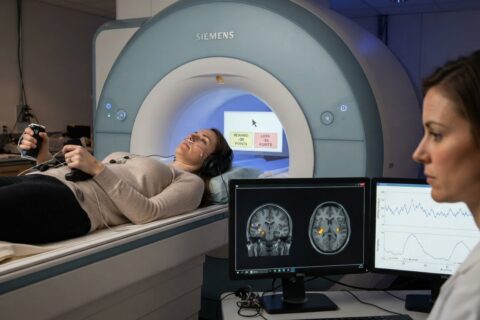
Ultra-processed foods linked to structural brain decline in large imaging study

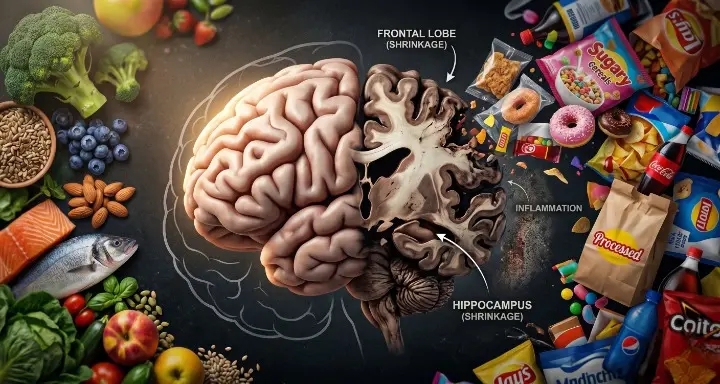
Your brain is shrinking. Not from age, not from a diagnosed condition, and not necessarily because you are overweight. A growing body of neuroimaging research is now pointing to something far more ordinary as the culprit: the packaged, hyper-engineered food that makes up the majority of calories consumed in most modern diets.
A study using UK Biobank data found that high consumption of ultra-processed foods is linked to adverse changes in brain structure, and critically, these effects appear to operate on the brain beyond just contributing to obesity. The damage isn’t a side effect of carrying extra weight. It is happening through separate biological pathways, and it is happening to people who don’t look sick at all.
What Ultra-Processed Actually Means
Before getting into the brain data, it helps to understand what researchers actually mean when they say ultra-processed. This isn’t about food being unhealthy in the traditional sense of too much salt or too much sugar. Ultra-processed foods are highly refined formulations containing elevated amounts of sugar, fat, sodium, food additives, and dietary emulsifiers. They are engineered products, not ingredients. Packaged snacks, flavored yogurts, breakfast cereals, instant noodles, soft drinks, and most fast food all fall into this category. In many countries, these products now account for more than half of all daily calories consumed.
The MRI Evidence
The most direct evidence comes from brain scans. A prospective cohort study of 58,423 participants aged 40 to 70 from the UK Biobank found that higher ultra-processed food intake correlated with reductions in subcortical gray matter volume, particularly in the hippocampus and amygdala, with stronger effects observed in the right hemisphere. At the cortical level, higher intake was associated with significant declines in volume, thickness, and surface area across major lobes, most notably the frontal, temporal, and occipital regions.
The frontal lobe is where your judgment lives. It governs impulse control, planning, decision-making, and the ability to resist immediate rewards in favor of long-term goals. The hippocampus is the seat of memory consolidation. Losing measurable volume in both regions isn’t a statistical footnote. It is a structural change in the physical hardware of the mind.
Longitudinal data from the Raine Study links high ultra-processed food diets to a 5 percent reduction in hippocampal volume after adjustment for vascular risk factors. And the downstream consequences are significant. Two complementary datasets, the 2025 Framingham analysis and a 2024 meta-analysis of nine cohorts, show a 25 to 35 percent excess risk of all-cause dementia in the highest ultra-processed food consumption group.
The Trap That Feeds Itself
What makes this research particularly unsettling is the self-reinforcing nature of the damage. The structural changes observed in feeding-related subcortical brain areas appear to create a self-reinforcing cycle of increased ultra-processed food consumption. In other words, eating these foods changes the very brain regions responsible for regulating what you eat next. Your capacity to choose differently is being quietly eroded by the choices you’ve already made.
The likely pathways involve both direct and indirect routes. Diets high in ultra-processed foods appear to trigger peripheral and central inflammatory responses, with elevated inflammatory markers observed in the prefrontal cortex in animal models. These inflammatory changes correlated with anxiety-like behaviors. The barrier between the bloodstream and the brain, known as the blood-brain barrier, is also implicated. Ultra-processed foods have been shown to compromise blood-brain barrier integrity, allowing systemic inflammatory signals to reach brain tissue directly.
The Obesity Red Herring
For years, researchers assumed that whatever damage ultra-processed foods caused to the brain was simply a consequence of weight gain. Fat tissue generates inflammation, inflammation harms the brain, and so the story seemed to write itself. But the newer data complicates that picture considerably.
Analysis reveals that ultra-processed foods exert effects on brain structure that are partially mediated by dyslipidemia, systemic inflammation, and body mass index, but are not fully explained by them. Some of the structural changes appear independently of whether a person is obese. The food itself, its additives, its emulsifiers, its effect on the gut microbiome and the inflammatory cascade that follows, is doing damage that body weight alone does not account for.
This matters because it removes the psychological escape hatch many people rely on. If you eat ultra-processed food regularly but you aren’t overweight, the assumption has been that you’ve avoided the worst consequences. The brain scans suggest otherwise.
The Window That Closes Early
Perhaps the most alarming dimension of this research involves timing. Maternal ultra-processed food consumption has been shown to alter fetal brain development, particularly in the prefrontal cortex and the reward system, predisposing offspring to cognitive impairments, behavioral disorders, and increased susceptibility to reward-driven eating patterns. The damage isn’t just something that accumulates across a lifetime of poor dietary choices. It can be pre-loaded before a child takes their first breath.
In adolescence, the window stays open but the stakes remain high. The prefrontal cortex doesn’t finish developing until the mid-20s. Flooding that developmental process with the inflammatory signals, gut disruption, and neurochemical interference that ultra-processed foods generate is not a neutral act. The brain being built during those years is the brain that will govern every decision made in adulthood.
What the Data Is Actually Saying
We have spent decades treating diet as a matter of physical health, weight management, cardiovascular risk. The neuroimaging data now demands that we add the brain to that conversation explicitly. The shrinkage being measured in these studies isn’t abstract. It shows up in memory, in impulse control, in the ability to plan ahead and resist short-term temptations.
Researchers are now calling for longitudinal neuroimaging studies to confirm causality and identify sensitive developmental windows, alongside public health measures including reducing ultra-processed food availability, improving food labeling, and prioritizing diets rich in fiber and minimally processed foods to support long-term cognitive health.
The biology has delivered its verdict. Ultra-processed food isn’t just widening waistlines. It is quietly reshaping the architecture of the mind, one meal at a time.
Sources:
Morys, F., Kanyamibwa, A., Fängström, D., et al. Ultra-processed food consumption affects structural integrity of feeding-related brain regions independent of and via adiposity. npj Metabolic Health and Disease, 2025; 3(1): 13. DOI: 10.1038/s44324-025-00056-3 https://www.nature.com/articles/s44324-025-00056-3
Ultra-processed food intake and brain health in middle-aged and older adults. J Nutr Health Aging. 2025 Aug 4; 29(10): 100644. DOI: 10.1016/j.jnha.2025.100644 https://www.sciencedirect.com/science/article/pii/S1279770725001691