Scientists find new hope for difficult cancers like pancreatic and lung using personalized immune training

You’ve had the surgery. The surgeon comes out, masks down, and gives you the news everyone prays for: “We got it all. The margins are clean.” You go home, breathe a sigh of relief, and try to return to normal life. But in the back of your mind, there is a ghost. It’s the fear of the one cell that got away—the microscopic runaway that is currently hiding in your bloodstream, waiting to take root and grow back into a monster.
For decades, this was the wall we couldn’t climb. We could cut, we could burn with radiation, and we could poison with chemotherapy. But we couldn’t teach the body to keep watch. Now, that is changing. According to a massive new review published in the Journal for ImmunoTherapy of Cancer, we are entering an era where your cancer treatment is as unique as your thumbprint.
The secret isn’t a new drug. It’s a piece of code.
The Digital Blueprint of a Killer
We all know mRNA because of the COVID-19 pandemic. It’s the courier that tells your cells how to build a specific protein. In the context of cancer, scientists are using this technology to send a “Most Wanted” poster directly to your immune system.
The challenge with cancer has always been that it looks like you. It’s your own cells gone rogue, which is why the immune system often ignores it. But cancer is messy. As it grows, it develops “somatic mutations”- glitches in its DNA that result in weird, misshapen proteins called neoantigens. These neoantigens are the red flags. They exist on the tumor, but not on your healthy tissue.
Scientists have found that if they can identify these specific red flags, they can encode them into an mRNA sequence. When you get the shot, your body produces these harmless “flags,” and your T-cells—the ultimate predators of the immune system—undergo a specialized training session. They learn to recognize the “fake” flags so that when they encounter the real tumor cells, they don’t hesitate. They strike.
The Computational Ghost Hunter
How do you find a needle in a haystack when the needle is a single mutation in a sea of three billion DNA base pairs? This is where the heavy lifting happens, far away from the hospital bed.
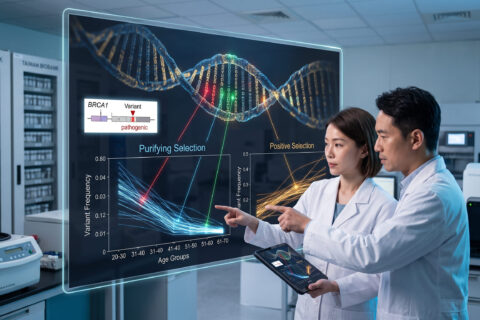
New research highlights a staggering reliance on high-performance computing. Scientists take a biopsy of your tumor and a sample of your healthy blood, then sequence them both. They use massive algorithms like NetMHCpan and MHCFlurry to predict which of your tumor’s thousands of mutations are actually “visible” to your immune system.
It’s a game of high-stakes probability. The computer has to predict how a specific protein fragment will fit into your Human Leukocyte Antigen (HLA) complex—essentially the “display case” your cells use to show the immune system what’s inside. If the fit isn’t perfect, the immune system won’t see the threat. This computational workflow has become so advanced that it can now prioritize the top 20 or 34 “most likely to succeed” mutations for your specific vaccine.
The KEYNOTE Success
Is this all just theoretical? Not anymore. The data coming out of clinical trials is starting to turn heads. Take the KEYNOTE-942 trial, for example.
Researchers combined a personalized mRNA vaccine (known as mRNA-4157) with a standard immunotherapy drug for patients with high-risk melanoma. The results showed a “numerically improved” recurrence-free survival rate. In plain English: the people who got the personalized code were significantly less likely to see their cancer return.
We’re seeing similar ripples of hope in pancreatic cancer and non-small cell lung cancer. In one trial for pancreatic ductal adenocarcinoma, patients who responded to the vaccine saw a delayed recurrence of their disease. These aren’t just statistics; they are months and years of life reclaimed from a disease that used to be a certain death sentence.
The Invisible Adjuvant
One of the strangest things scientists found is that the delivery system itself—the tiny fatty bubbles called Lipid Nanoparticles (LNPs) that hold the mRNA—might be doing more than just carrying cargo.
Recent studies suggest these lipids act as an “intrinsic adjuvant”. They don’t just sit there; they actually wake up the immune system’s alarm bells, telling the body to pay extra attention to the mRNA instructions. There have even been anecdotal reports of people’s unrelated tumors shrinking after getting an mRNA vaccine for SARS-CoV-2, suggesting that just “re-activating” the immune system can sometimes have collateral benefits for cancer patients.
The Road Ahead
Why isn’t this at every corner pharmacy yet? There are still hurdles. For one, identifying these mutations from a tiny needle biopsy is difficult, and different algorithms often disagree on which mutations are the best targets. There’s also the issue of “immune dominance,” where the body focuses so much on one target that it ignores others, potentially allowing the cancer to sneak around the back door.
But the momentum is undeniable. There are currently dozens of active trials for mRNA individualized therapies, covering everything from renal cell carcinoma to gastric cancer.
You are no longer looking at a one-size-fits-all poison. You are looking at a future where, within weeks of a diagnosis, a computer can draft a digital blueprint of your specific enemy, a laboratory can print that code into a vial, and your own body can finish the fight. The war against cancer is becoming a war of information. And for the first time, we’re the ones with the better code.