Scientists found the biological cure for the “us versus them” mentality tearing society apart
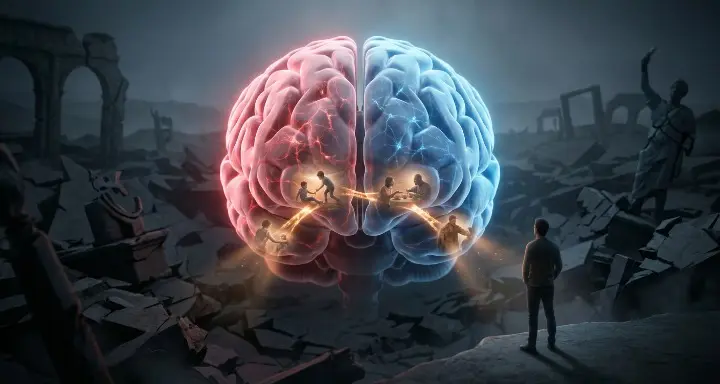
Imagine you are standing in a crowded grocery store. A stranger in front of you drops a heavy bag of oranges, and the fruit rolls across the linoleum. Before you can move, another shopper—decked out in a hat or t-shirt representing the political candidate you loathe most—springs into action. They don’t just help; they stay to make sure the elderly stranger is okay, offer a genuine smile, and go about their day.
In that split second, something in your brain glitches. The caricature of the “evil” out-party member, a monster you’ve built through years of doom-scrolling and cable news, suddenly has a human face.
This isn’t just a feel-good anecdote. According to a study published in Social Psychological and Personality Science, this specific type of “moral learning” is a potent antidote to affective polarization—the fancy term for why we’ve started to hate our neighbors simply because of how they vote. Researchers Tal Moran and Eva Walther have uncovered that our brains aren’t permanently hardwired for partisan war. We’ve just been trained to see the other side as a monolith of malice. To fix it, we have to go back to school.
The Pavlovian Politics of Hate
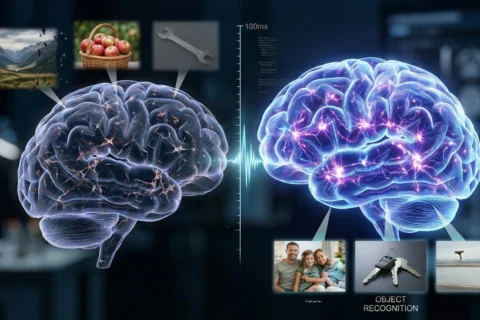
For years, social scientists have watched with growing alarm as the “feeling thermometer” (a tool used to measure how warmly we feel toward others) has plummeted. We don’t just disagree with the “other side” anymore; we find them morally bankrupt, even dangerous. This isn’t an accident. It’s the result of what psychologists call evaluative conditioning.
Think of it as Pavlov’s dog, but with politics. Every time you see a political opponent’s face paired with a headline about a scandal or a threatening policy, your brain creates a link. Eventually, the face alone triggers the “danger” signal. You don’t even have to think about it; it’s an automatic, gut-level revulsion.
The researchers decided to test if they could use this same mechanism to reverse the damage. They took participants and put them through a “moral learning” treatment. Instead of showing them dry policy debates, they paired members of the opposing political party with acts of genuine moral goodness.
The results were startling. The participants didn’t just say they felt better on a survey—their automatic, subconscious preferences shifted. The “enemy” stopped looking like a threat and started looking like, well, a person.
Breaking the Mirror
What makes this research so vital is that it tackles the “So What?” factor of our daily lives. You’ve likely felt the exhaustion of the holiday dinner turned shouting match, or the quiet decision to stop following an old friend because their posts made your blood boil. We’ve become experts at building walls.
The study showed that this learning effect wasn’t a fleeting moment of clarity. The reduction in “in-party preference”—that tribal urge to protect your own and attack the rest—lasted even after a two-day delay. It turns out that when you witness someone you’ve been conditioned to hate doing something undeniably good, your brain struggles to maintain the “evil” label. It’s a cognitive dissonance that eventually resolves by softening the hatred.
This suggests that the path out of our current social fragmentation isn’t through more facts or louder arguments. You can’t argue someone into not hating you. But you can show them.
The Viral Spread of Decency
The implications for our digital lives are massive. If the “moral learning” treatment works in a lab, why isn’t it working in our feeds? The answer is simple: conflict sells. Algorithms are designed to show you the worst version of your opponent because outrage is the ultimate engagement hack.
But you have the power to hack it back. The research implies that if we want to lower the temperature of our society, we need to intentionally seek out and share the “moral exemplars” from the other side. This isn’t about being “polite” or “centrist.” It’s about tactical psychological health.
When we see an out-party member risking something to help another, it challenges the narrative of democratic backsliding. It reminds the amygdala—the brain’s fear center—that the person across the aisle shares the same basic human values of fairness, care, and loyalty.
A New Mental Map
We are living in an era where trust is a rare currency. But as The Lancet and other major journals have noted, social isolation and chronic political stress have real-world health consequences, from high blood pressure to shortened lifespans. Learning to like the “enemy” isn’t just a political strategy; it’s a wellness practice.
The next time you find yourself spiraling into a pit of partisan rage, ask yourself: when was the last time I looked for the good in the people I’m supposed to hate? It feels counterintuitive, almost like a betrayal of your own “team.” But the science is clear. If we don’t start the process of moral learning, the walls we’ve built will eventually become our cages.
The bridge is there. Your brain is ready to build it. You just have to be willing to look at the person on the other side and see something other than a monster.