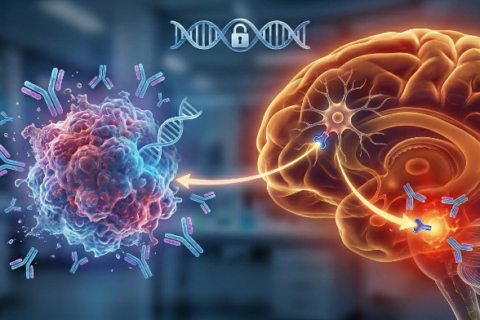
Scientists Discover Why Pediatric Brain Cancer Only Attacks Children
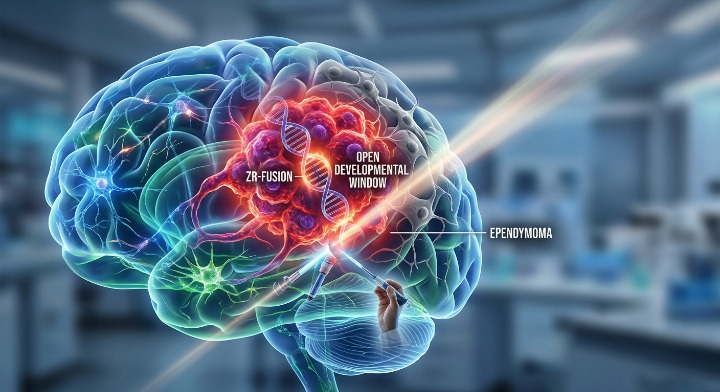
Imagine the human brain as a massive, intricate construction site. During early childhood, the “blueprints” for the brain are wide open. Stem-like cells are working at lightning speed, following instructions to build neurons, glial cells, and all the complex architecture that makes us who we are. In a healthy brain, once the building is finished, these blueprints are rolled up and locked away.
However, a new study has revealed that some of the most aggressive pediatric brain tumors, known as ependymomas, have learned how to jam the locks.
For years, scientists were puzzled by a specific protein fusion called ZFTA-RELA (ZR). They knew this protein caused tumors, but they didn’t know why it only caused them in the brain cortex of young children and not in adults. They assumed the ZR protein was actively breaking into the DNA and forcing “cancer doors” open. But the truth, it turns out, is much more opportunistic.
The ZR protein doesn’t break in; it simply walks through a door that is already open. During early brain development, certain regions of our DNA are “open” and accessible to allow for rapid growth. The ZR protein identifies these specific open windows and hops inside. Once there, it essentially “freezes” the cell in that state. These cells become trapped in a permanent “immature” phase—they are supposed to grow into healthy brain tissue, but instead, they stay in a state of perpetual, rapid division. They are stuck in a “developmental limbo.”
Why does this matter for the future of medicine?
This discovery is a game-changer for how we treat childhood cancer. Currently, ependymomas are notoriously resistant to chemotherapy. Because the tumor cells are so similar to normal developing brain cells, traditional drugs often struggle to tell them apart.
By identifying that these tumors rely on specific “open” periods of brain development, researchers have found a “vulnerability window.” This opens up three incredible possibilities:
-
Forcing the “Aging” Process: Instead of trying to kill the tumor cells with toxic chemicals, doctors might be able to use “differentiation therapy.” This would essentially force the cancer cells to “grow up” and become mature, harmless brain cells, effectively “unlocking” them from their limbo state.
-
Precision Targeting: We now know that these tumors grow from a few “dominant ancestor” cells that find the perfect “sweet spot” of protein expression. If we can target these specific “winner” cells early on, we can stop the tumor before it even starts.
-
Prevention and Early Detection: Understanding that the tumor is “leveraging” a normal developmental state helps scientists predict which children might be at risk and how to monitor the brain during these critical growth windows.
This research shifts the perspective from seeing cancer as a “broken” part of the body to seeing it as a “hijacker” of a natural process. By understanding the hijacker’s schedule, we can finally learn how to kick them off the ride. For the thousands of families dealing with pediatric brain tumors, this isn’t just a lab discovery—it’s the first step toward a future where “incurable” childhood cancer becomes a treatable, and eventually preventable, condition.