A Tiny Genetic Fragment Could Be the Key to Supercharging Cancer Immunotherapy
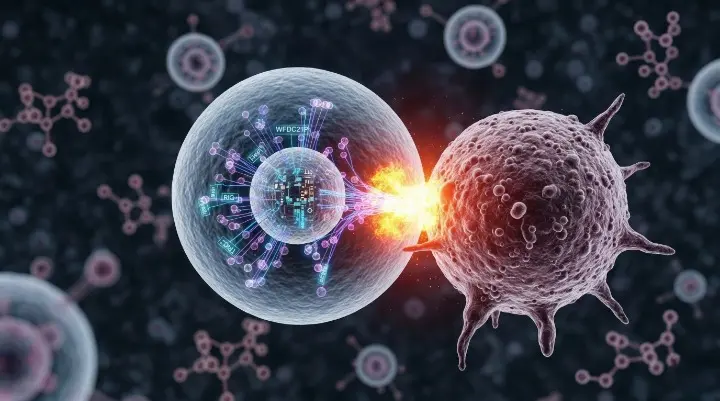
In the world of genetics, we used to think that “non-coding” genes—parts of our DNA that don’t make proteins—were just “junk.” But a groundbreaking study published in PNAS has revealed that one of these “ghost molecules,” called WFDC21P, is actually a master general in the war against Triple-Negative Breast Cancer (TNBC).
TNBC is often called the “difficult” breast cancer because it doesn’t respond to hormonal therapies. For years, scientists have been looking for a way to make the body’s own immune system recognize and destroy these stubborn tumors. This new research suggests we’ve finally found the “alarm system” that makes it happen.
The Molecular Alarm System
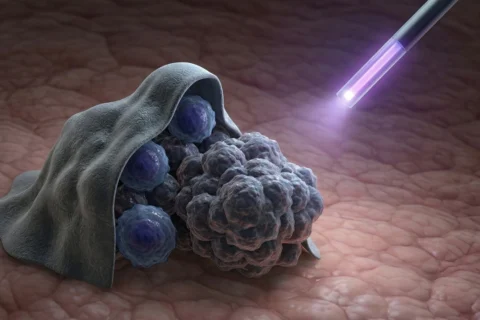
To understand this discovery, imagine your immune system as a high-tech security team. Usually, cancer cells are like clever burglars—they wear disguises so the security team (your T-cells) ignores them.
The study found that WFDC21P acts like a specialized security sensor. When this molecule is active, it binds to a protein called G3BP1. Together, they “kickstart” a major defense pathway known as RIG-I. Once RIG-I is activated, the “disguise” is ripped off the cancer cells. The immune system suddenly sees the tumor for what it is and launches a full-scale attack.
This isn’t just a laboratory curiosity; it’s a roadmap for the next generation of cancer treatment.
-
Treating the “Untreatable”: Because Triple-Negative Breast Cancer is so aggressive, finding a natural “on-switch” for the immune system within the tumor itself is a massive win. This could lead to therapies that “awaken” WFDC21P in patients where it has gone dormant.
-
Precision Immunotherapy: Standard immunotherapy doesn’t work for everyone. Doctors could soon use the levels of WFDC21P as a “biomarker.” If a patient has high levels of this molecule, they are much more likely to respond to existing treatments, allowing for more personalized and effective care.
-
A New Class of Drugs: This research opens the door to “RNA-based” therapies. Much like the technology used in recent vaccines, scientists could potentially “deliver” instructions to cancer cells to produce more WFDC21P, essentially forcing the tumor to reveal itself to the immune system.
For a long time, cancer treatment was about “poisoning” the bad cells (chemotherapy). This research represents a shift toward “empowering” the good cells. By understanding the intricate dance between molecules like WFDC21P and G3BP1, we are learning how to give our bodies the tools they need to heal themselves.
This discovery proves that there is no such thing as “junk DNA.” Every part of our genetic code has a purpose, and in this case, a tiny, hidden molecule might just be the key to saving thousands of lives from one of the most aggressive forms of cancer.