Scientists Discover “Epigenetic Memory” in the Gut that Fuels Tumors

We often think of our body’s healing process as a clean slate. You get a cut, a scar forms, and eventually, life goes on. But at the microscopic level, especially inside our digestive system, the body doesn’t just heal; it remembers. A groundbreaking study published in the journal Nature has revealed that this cellular memory is far more sinister than we knew: it actively helps cancer to grow, years after the original sickness has passed.
The study focused on colitis, a form of chronic inflammation in the colon. People with colitis are known to have a much higher risk of developing colon cancer. Until now, doctors thought this was because the constant, “fiery” inflammation directly damaged DNA, leading to mutations. This new research shows that while inflammation is the trigger, the actual culprit that drives cancer is the “epigenetic memory” it leaves behind.
What is Epigenetic Memory?
To understand this, we need to think beyond genetics. If DNA is the instruction manual for your body (the “hardware”), epigenetics is the software that decides which instructions get read and when. Our bodies use chemical “tags” (like methyl groups) to unlock certain genes and lock others.
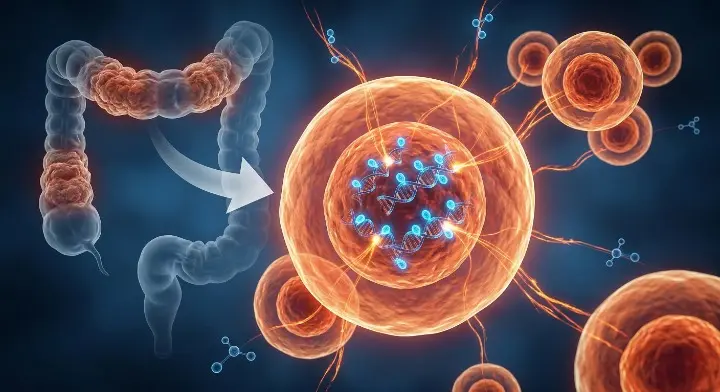
The Nature study discovered that when a cell suffers through severe colitis, the trauma actually changes where these “tags” are placed. Long after the inflammation has simmered down and the tissue looks healthy under a microscope, the cells retain these new “tags.” The memory of the “war” is still etched into their operating system.
How Memory Promotes Tumors
The researchers found that this “epigenetic scar” keeps the cells in a permanent, hyper-alert state. Specifically, the tags are stuck on genes that control cell growth and repair.
In a healthy gut, these genes turn “on” to fix a injury and immediately turn “off” when the work is done. In a cell with “colitis memory,” the “off” switch is broken. These cells act like they are in a perpetual state of emergency. They are always in “repair mode,” which means they are constantly dividing. In the world of biology, constant, uncontrolled cell division is the definition of cancer. The “memory” of past stress is what causes these cells to ignore all signals to stop growing.
This discovery is a major paradigm shift. Instead of just fighting active inflammation, we now know we need to fight the memory of inflammation.
-
Preventative Medicine: This research suggests that we might one day be able to “screen” people who have previously had colitis (or other chronic inflammatory diseases) by checking for these specific epigenetic tags. This could identify those at highest risk for cancer before any tumors even appear.
-
A New Class of Drugs: The most exciting practical use is “epigenetic therapy.” These would be drugs designed not to kill cells (like chemotherapy), but to act like biological “erasers” or “reset buttons,” going into the cell’s nucleus and removing the faulty chemical tags left by past trauma. By deleting the memory of the disease, we could effectively reprogram the cells to behave normally again, preventing the transition into cancer.
-
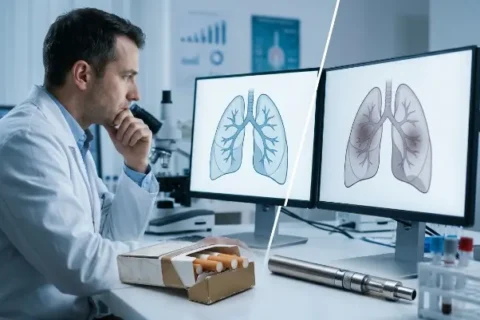
Broader Implications: While this study focused on the gut, this mechanism of “stress memory” likely applies to other chronic diseases linked to cancer, such as chronic hepatitis (liver cancer) or even persistent tissue damage from smoking (lung cancer).
The study reminds us that our bodies are incredible storytellers, writing the history of our illness into our very cells. However, this cellular “journaling” can be dangerous. We have taken the first step toward not just treating diseases, but understanding how to help our bodies finally forget them, preventing a past trauma from defining our future health.